Introduction
On a used hook lift truck for sale, two parts move the asking price harder than anything else: the subframe and the lift cylinder. Together they decide how safely the truck loads and how many working years it has left. No serious valuation gets far without looking at both.
This guide walks through what to check on each one. First the subframe: mounting, welds, wear points. Then the lift cylinder: seals, rod condition, hydraulic behavior. After that comes the step most buyers skip, turning those findings into repair numbers and a defensible offer.
The same mechanics apply to every used hook lift, whether it ran a waste route, worked a construction or demolition site, hauled scrap metal, or spent its life on a landscaping fleet. The subframe has to match the chassis under it, so it pays to understand how bin size relates to chassis length before you judge the rest.
For a buyer, a used hook lift truck is a capital asset, and these two components tell you what that asset is really worth.
Why the Subframe and Lift Cylinder Decide a Used Unit’s Price
The subframe and the lift cylinder carry the entire lifting and dumping load. Every container you hook, drag, raise, and tip hangs off those two assemblies. That is why their wear predicts, better than any other single factor, whether a used hook lift will keep earning for years or start draining your repair budget in the first month.
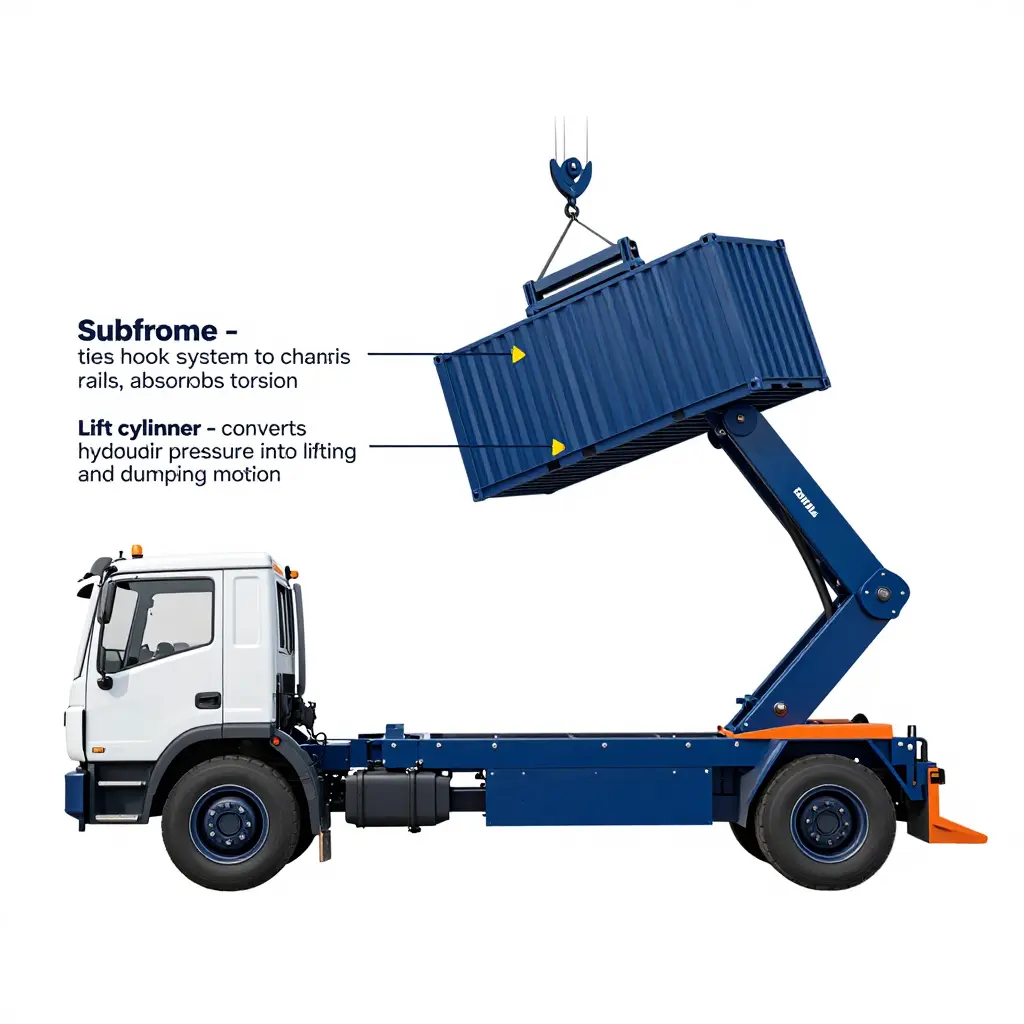
The subframe is the structural bridge between the hook lift system and the truck itself. It bolts or welds to the chassis rails and spreads the shock of a loaded container across the whole frame instead of a single point. Its job is torsion control. When a bin is dragged on, tipped back, or set down on uneven ground, the subframe twists and flexes so the chassis rails stay straight. Look for cracked welds, elongated mounting holes, rust scale between the subframe and the rails, and any sign the assembly was re-welded after a failure.
The lift cylinder does the heavy work. It turns hydraulic pressure into the controlled raise that loads and dumps containers. A healthy cylinder extends evenly under load. A tired one drifts, hesitates, leaks past its seals, or pushes black fluid around the rod. Rod scoring, bent rams, weeping glands, and a damp hydraulic circuit all point to expensive work coming soon.
What Actually Moves the Price
Walk a yard and the cleanest paint and tidiest cab often sit on the highest-priced trucks, until the inspection starts. Experienced buyers flip that order. A repainted hook lift with a torched subframe is worth less than a faded one with a straight, dry, original assembly. Cosmetics give you something to negotiate over. Structure sets the price.
Buyers and fleet managers in waste, construction, demolition, scrap metal, and landscaping work this way every day. They know the truck goes back to work within a week, so the real question is what fails first under a fully loaded bin, not how it looks. The same reasoning makes subframe and hook geometry worth checking against the chassis when you compare bin size to chassis length before you commit.
What the Inspection Will Reveal
The inspection answers one question: can the subframe and lift cylinder still carry the load they were built for? That answer sets fair market value. Paint, cab, and sticker do not.
Component Condition vs. Price Impact: A Buyer’s Comparison Table
The table below turns a walk-around into a number you can defend on the lot. Each row gives the inspection focus, the three condition grades you can actually see, and how those grades move value.
| Component | Inspection Focus | Typical Condition Grades (Good / Fair / Poor) | Estimated Price Impact on a Used Hook Lift Truck |
|---|---|---|---|
| Subframe rails and welds | Rail straightness, weld continuity, cracking at stress points, section thickness lost to rust | Good: straight rails, uniform factory welds, no cracks. Fair: minor pitting, isolated field welds, light corrosion. Poor: visible cracks, distortion, deep section loss, previous failed repairs | Good holds baseline value; Fair trims roughly 5-10%; Poor cuts 20%+ or rules the unit out |
| Subframe-to-chassis mounting and fasteners | Bracket alignment, bolt torque and stretch, cracked or wallowed bolt holes, extra frame drilling | Good: all fasteners present and torqued, clean brackets. Fair: light surface rust, one or two replaced fasteners. Poor: loose, missing, or stretched bolts, elongated holes, cracked brackets | Good needs no adjustment; Fair takes 3-8% off; Poor removes 15%+ and points to hidden flex damage |
| Lift cylinder barrel and seals | Barrel scoring, weld seams, seal weeping, rod seals, internal bypass | Good: dry barrel, clean seams, no scoring. Fair: slight weeping at the seals, minor cosmetic scoring. Poor: deep scoring, cracked weld seams, active leaks, internal bypass | Good sets the baseline; Fair costs 5-10% for a reseal; Poor adds 10-20%+ for a rebuild or replacement |
| Lift cylinder rod and rod end | Chrome plating integrity, pitting, straightness, rod-end and eye wear, pin bore | Good: unmarked chrome, true rod, tight eye bore. Fair: light pitting or seal-line wear. Poor: flaking chrome, bent rod, wallowed rod end | Good sets the baseline; Fair trims 5-12% for a reseal or rechrome; Poor adds 12-25% for a rod or cylinder replacement |
| Hydraulic hose and fittings | Hose age and cracking, abrasion, fitting corrosion, leak history, routing | Good: supple hoses, clean dry fittings. Fair: minor cracking, slight seepage. Poor: cracked or weeping hoses, corroded fittings, known leaks | Good sets the baseline; Fair trims 1-4%; Poor trims 3-8% and suggests broader maintenance neglect |
| Pivot pins and bushings | Pin wear, bushing play, grease zerks, ovality, lube history | Good: minimal play, holds grease, round pins. Fair: noticeable play, worn bushings. Poor: heavy play, seized pins, ovalized bores | Good sets the baseline; Fair trims 5-10%; Poor adds 10-20% plus downtime for line-boring |
Read the grades together. A Poor rating on any structural or cylinder component sets your opening offer. The Fair ratings you accumulate everywhere else justify your final counter.
Subframe Inspection: The Checks That Change the Price
A cracked, twisted, or rusted-through subframe makes the truck unsafe, and the repair can cost as much as the vehicle itself. On a used hook lift truck, the subframe carries every load the hook mechanism throws at it, which makes a compromised one a reason to walk, not a bargaining chip. If you want the geometry sorted before you touch a wrench, it helps to understand how the frame relates to the body it carries when matching bin size to chassis length.
Six checks separate a fair price from an inflated one.
- Rail straightness and twist. Sight down each rail and measure corner-to-corner diagonals with a tape. A twisted rail means the whole hook lift subframe took a hard hit. Expect a double-digit percentage off the asking price, or walk away.
- Weld quality and any re-welds around the hook housing. Look for bird-dropping beads, undercut, and grinding marks that hide an old repair. Fresh or sloppy welds near the hook suggest the truck was abused, which justifies a serious price reduction.
- Corrosion and pitting depth along the main beams. Tap with a hammer and probe with a pick. Flaking scale or pinholes mean metal loss, and deep pitting is a structural red flag that pushes value down hard.
- Chassis rail mating surfaces and shims. The subframe should sit flush with matching shims, not stacked washers or gaps. Misaligned mating surfaces point to a botched install and future flexing and cracks.
- Mounting bolt and U-bolt torque, plus elongation. Check for stretched threads, rust trails, and loose nuts. Elongated bolts or loose U-bolts mean the subframe has been working in service, which is a clear negotiating point.
- Evidence of previous accident or overloading damage. Scan for mismatched paint, bent cross-members, and dented rails at the hook zone. Any of these means a history you will pay for later.
Price after you inspect, not before. A clean subframe supports a premium. Damage is where you push back.
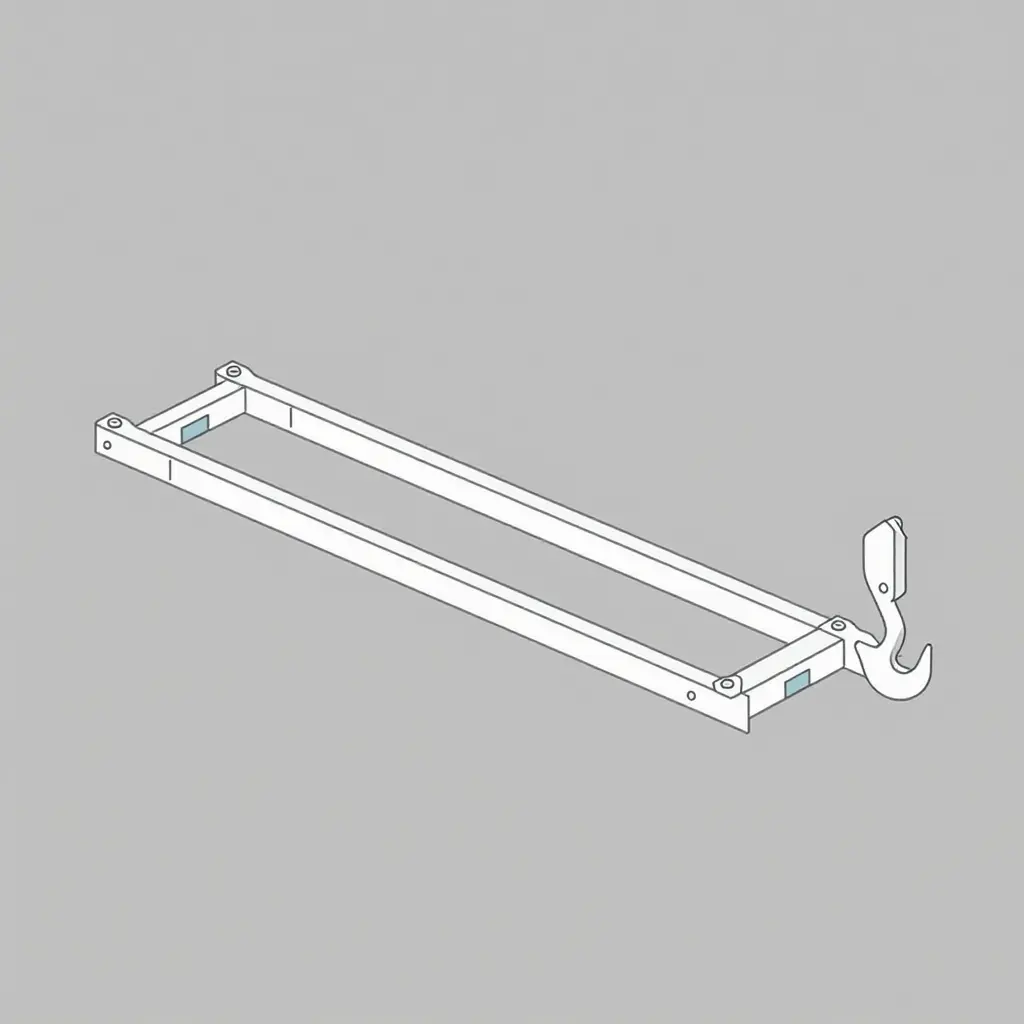
Figure 1: Simplified schematic of the hook lift subframe, showing the rails, the hook housing, and the chassis mounting points referenced in the checklist above.
Lift Cylinder Inspection: Reading Wear and Predicting Failure
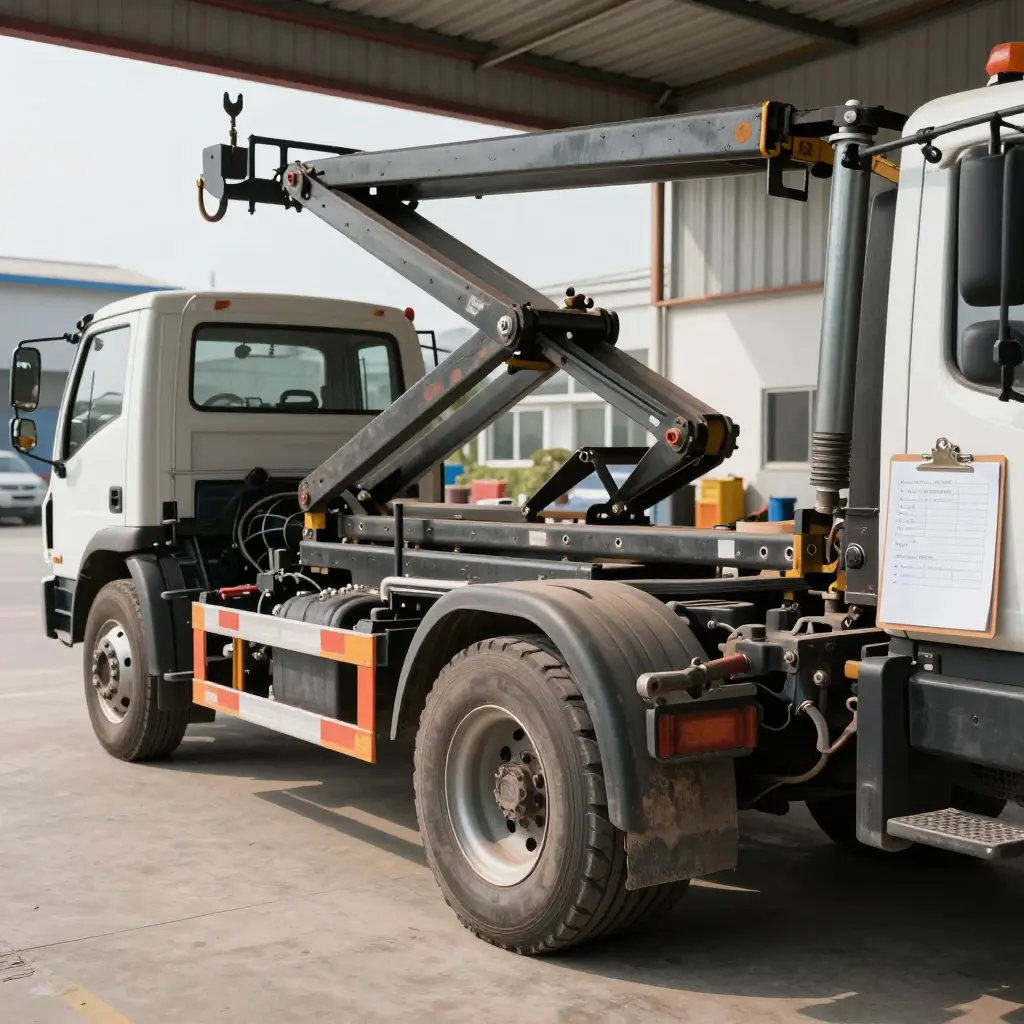
The lift cylinder takes more stress than any other hydraulic part on a used hook lift truck, and it causes more mid-job downtime than anything else. When that cylinder quits, the whole rig quits: the bin won’t lift, the crew stands idle, and the schedule slips. Inspect it like the deal-breaker it is, every time you evaluate a hook lift truck for sale.
Start at the barrel. Look for dents, deep scoring, and weeping welds along the seams and mounts. A damp film on the steel is a slow leak, and it only gets worse under pressure.
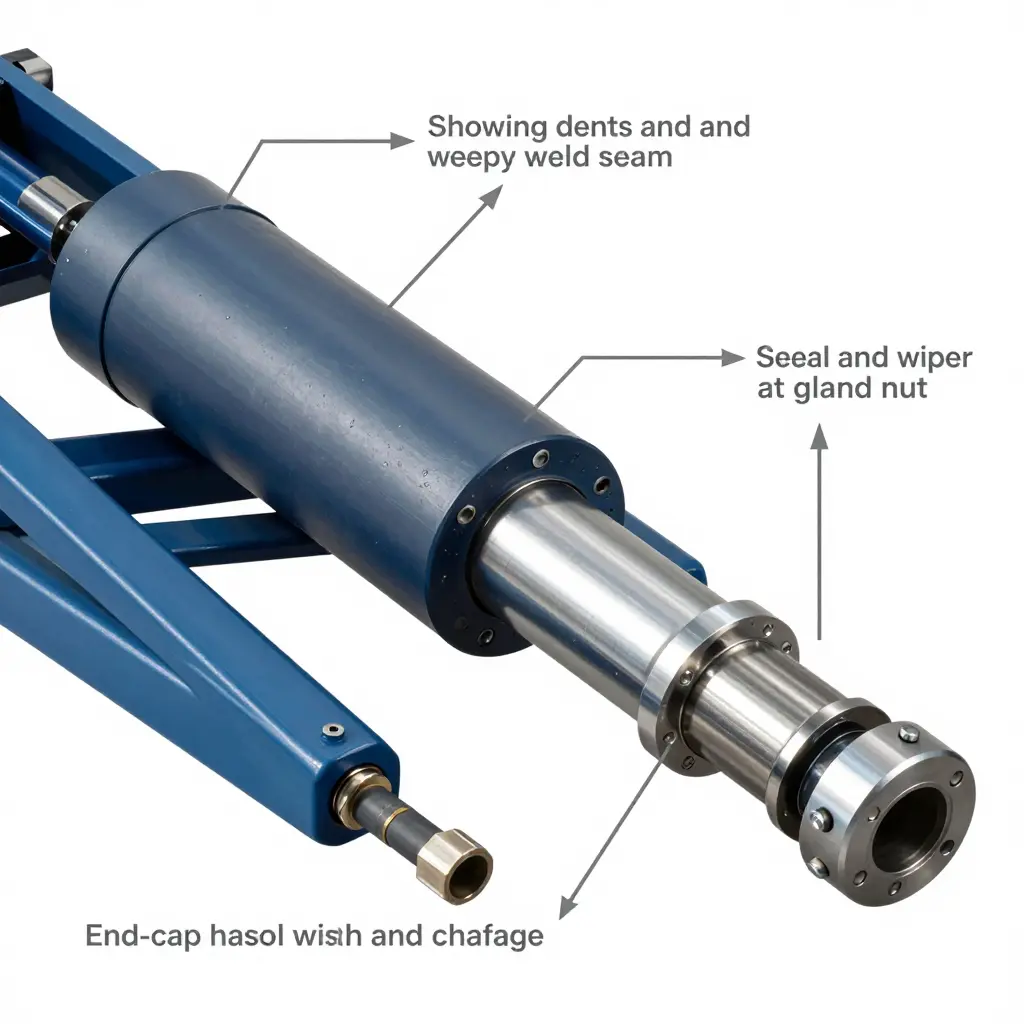
Run your hand along the chrome rod. Pitting, scratches, or even a slight bend will chew through seals and leak the moment the cylinder loads up.
Check the seal and wiper at the gland nut, then confirm the gland nut itself and the end-cap fasteners are tight. Loose hardware invites drift, uneven travel, and sudden failure.
Draw a hydraulic oil sample. Dark, milky, or gritty fluid, especially with visible metal particles, means the system is already wearing internally.
Trace every hose for chafing and every fitting for leaks. Then cycle the cylinder under a real load and watch for drift, slow travel, or unusual noise.
A lift cylinder that seeps, drifts, or cycles unevenly is telling you the internal seals are going. Budget for the repair. Better, deduct its cost from the asking price. If the rest of the truck checks out, it also helps to understand how bin size matching works, since lift geometry and chassis length both affect how hard the cylinder works every day.

Estimated repair cost ranges (USD) for the most common faults found during a used hook lift truck inspection. Subframe rail replacement, roughly $3,500-$9,000, is the one buyers use most often to justify a large price cut.
Turning Inspection Findings Into a Fair Price
Your notes describe the condition. Pricing turns that description into a number. The math is simple once you stop treating every flaw the same: start with a baseline, subtract what it costs to fix what is broken, then price in the risk of what might break next.
Step 1: Anchor to a Baseline Market Value
Start with today’s selling price for a comparable unit in genuinely good condition. Match the axle rating, wheelbase, and bin capacity to chassis length, because configuration drives value more than most buyers expect. That clean number, not the seller’s asking price, is your reference point.
Step 2: Subtract the Real Cost of Every Defect
Put a dollar figure on every finding, starting with the subframe and the lift cylinder.
- A cracked or previously repaired subframe weld needs a fabrication quote: labor, material, and downtime.
- A scored lift cylinder barrel means a reseal or a full replacement, whichever the shop recommends.
- A bent subframe rail affects alignment and may need straightening and reinforcement.
Use quoted numbers, then subtract each one from your baseline.
Step 3: Add a Risk Margin
Some defects sit still. Others are already failing. A pitted cylinder that still works deserves a risk margin, because it probably will not for long. Add a buffer, often 5 to 15 percent, for anything you judge likely to worsen with use.
Negotiable Wear vs. Deal-Breakers
Separate wear from failure. Worn pivot bushings, tired hydraulic hoses, and cosmetic rust are negotiable. A structurally compromised subframe or a failed main lift cylinder is a deal-breaker. Walk away, or demand a discount that covers full replacement.
This is how fleet managers buying for waste and demolition duty think. They weigh the immediate repair cost against the expected service life of the whole unit. A cheap truck that needs a cylinder rebuild within six months was never cheap; it just moved the cost down the road. The chart below builds a fair offer line by line.
| Inspection Finding | Typical Action | Price Adjustment (USD) |
|---|---|---|
| Hairline subframe weld crack | Grind and re-weld | -2,800 |
| Bent subframe rail | Straighten and reinforce | -3,700 |
| Scored lift cylinder barrel | Reseal or replace | -3,200 |
| Pitting near cylinder seals | Risk margin | -4,300 |
| Fresh pivot bushings | Wear item (negotiable) | No adjustment |
| Baseline good-condition value | – | 85,000 |
| Fair offer after adjustments | – | 71,000 |
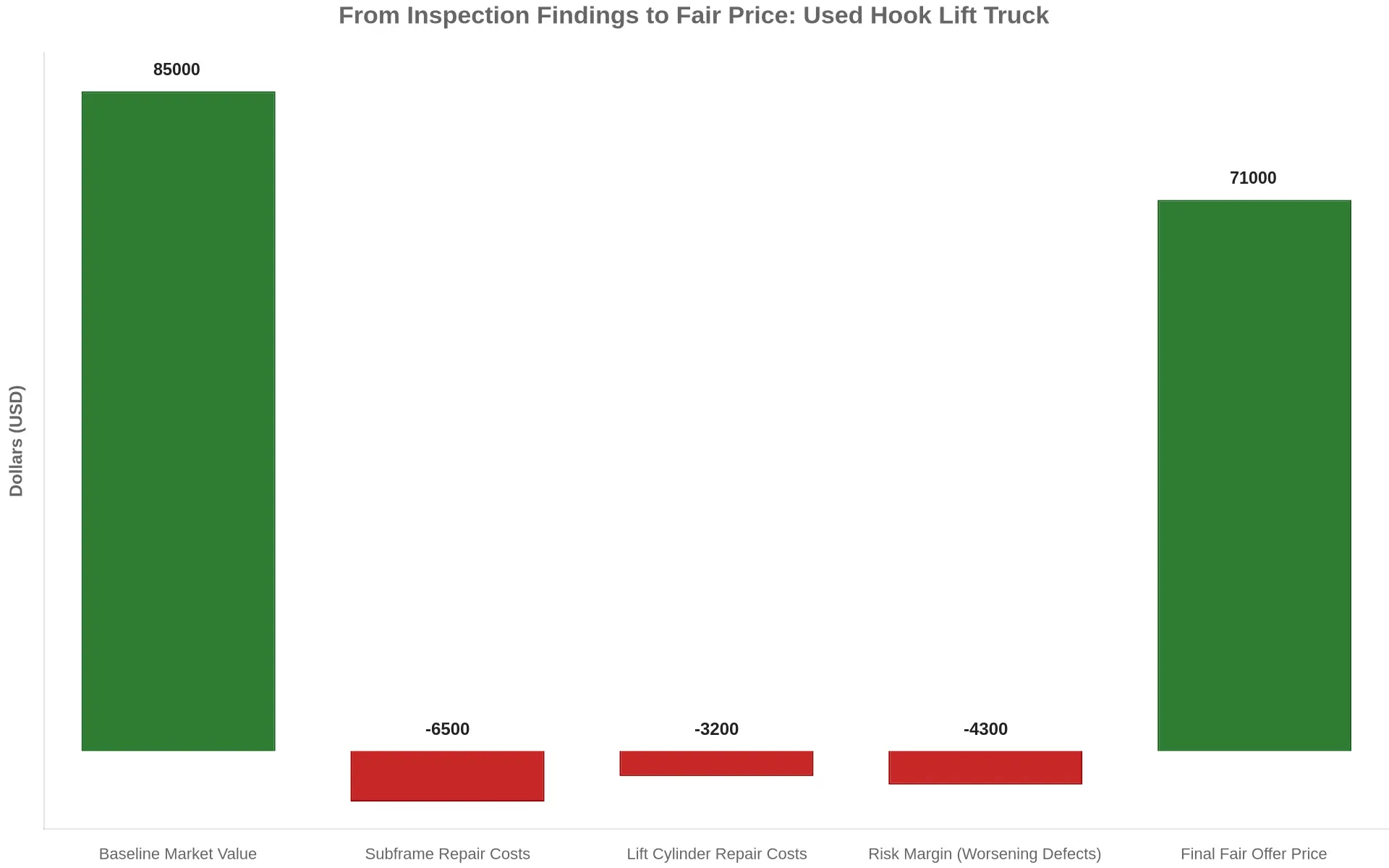
Run the numbers the same way every time and the offer holds up under argument. For how configuration shapes the baseline before you subtract anything, see our guide on matching bin capacity to chassis length.
The Lift Cylinder: Know the Parts Before You Know the Problems
Slide under a used hook lift truck and the lift cylinder is where the money hides. It tilts the subframe and drags a loaded bin onto the rails, and if it is tired, resealing or replacing it will be one of the costliest line items on your estimate. You cannot judge its condition until you can name what you are looking at. The schematic below marks the core inspection points, and the checklist follows.
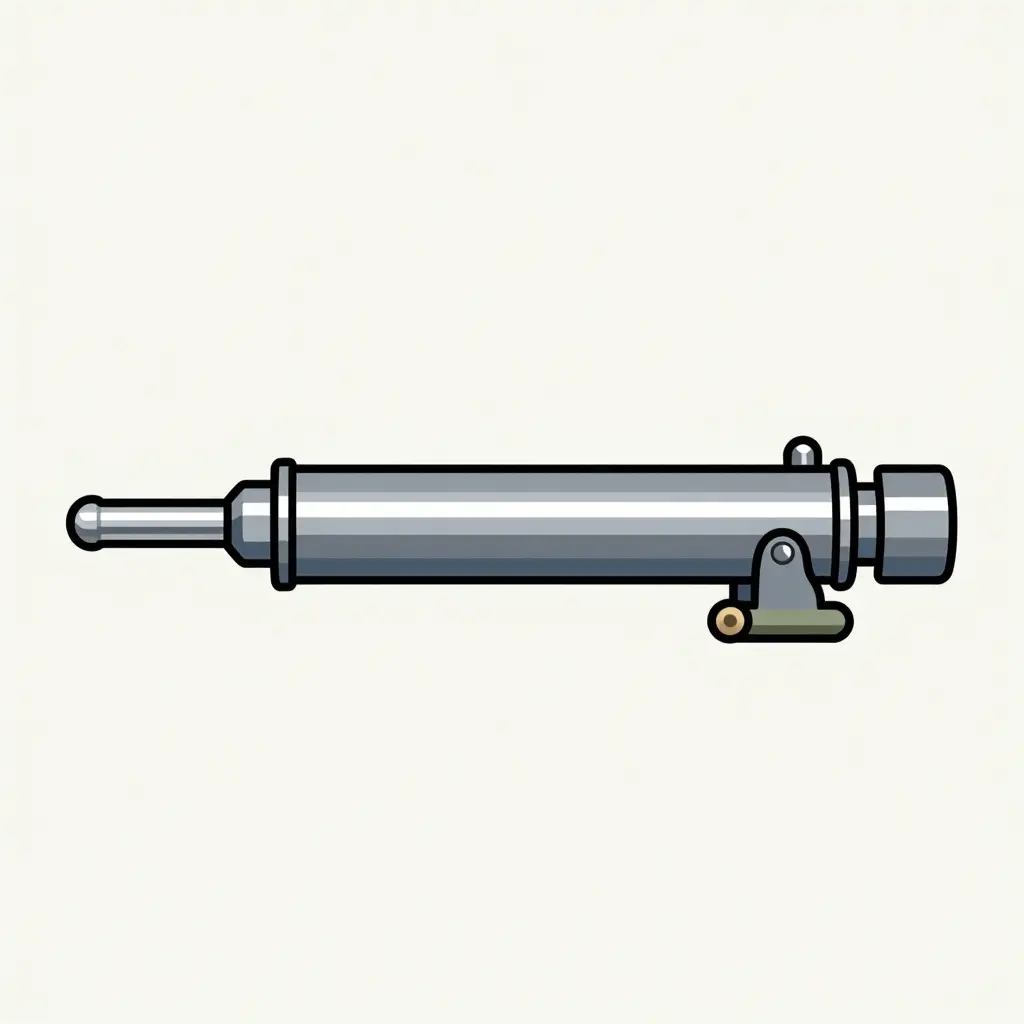
Back to front, the anatomy is simple. The barrel holds the hydraulic fluid and should show no dents, weld repairs, or heavy corrosion. The chrome rod is the polished shaft that slides in and out, and pitting, scoring, or flaking chrome here shreds seals and leaks fluid. The rod end pins to the subframe linkage, so check it for wear, cracks, or a wallowed-out pin bore. The gland nut seals the rod where it enters the barrel and is a common leak point; look for weeping fluid or a crushed, backed-out thread. The end-cap closes the base of the barrel, and weeping or deformation there can point to internal damage. The hydraulic hose attachment feeds the pressure line in, so inspect the fitting, the hose crimp, and the surrounding area for chafing or leaks.
How the cylinder works with the rest of the hoist matters too. If you are still deciding which hoist design fits your operation, compare a hook lift against a cable hoist before you settle on a used unit.
A Repeatable Valuation Framework for Buyers
Pricing a used hook lift truck should not come down to gut feeling. Run the same sequence on every candidate and the hardware sets the number, not the mood of the negotiation. Apply it to any hook lift truck for sale.
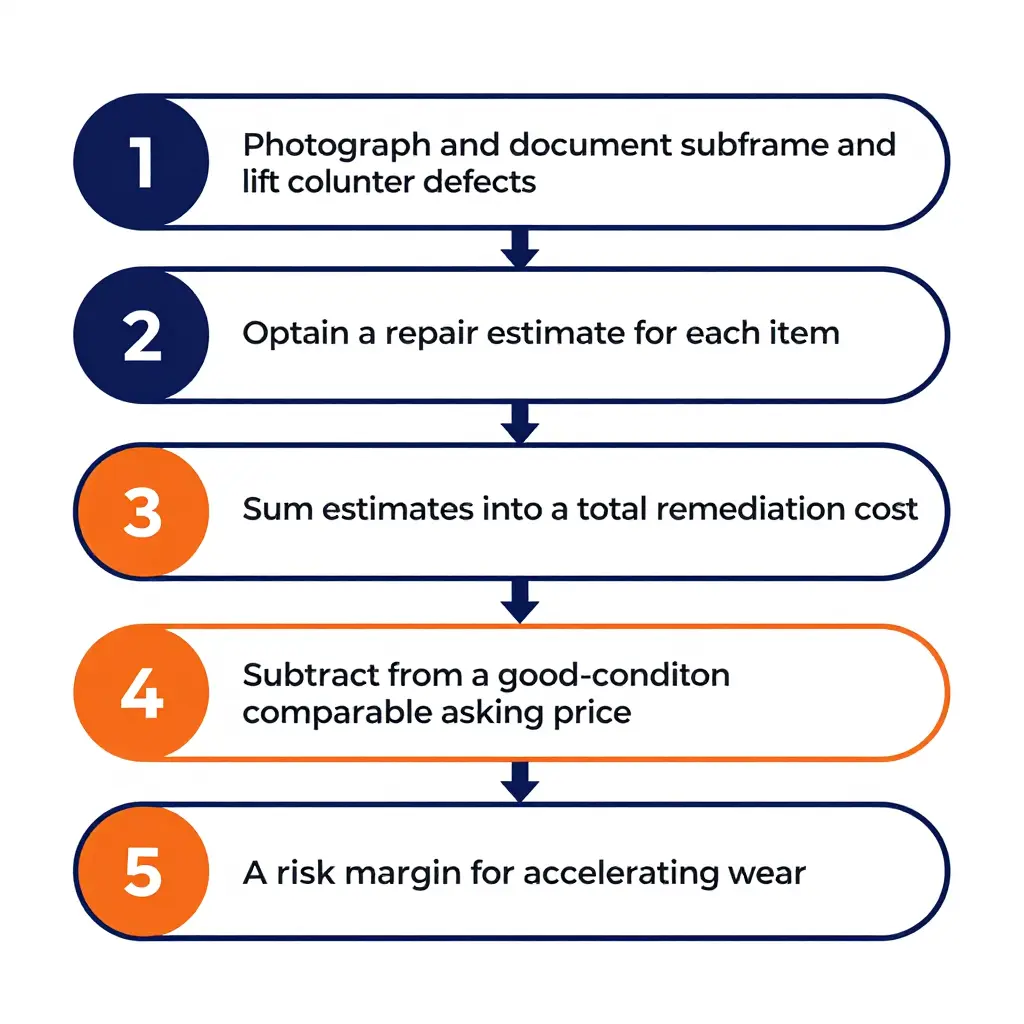
- Photograph and document each defect. Inspect the hook lift subframe and every lift cylinder. Take dated photos of cracks, corrosion, weld repairs, rod pitting, and seal seepage, so your figures stay defensible.
- Obtain a repair estimate for each item. Ask a shop you trust for line-item quotes, with subframe work separate from cylinder rebuilds or replacements.
- Sum the estimates. Add the quotes into a single remediation cost.
- Subtract from a good-condition comparable. Find the asking price of a clean comparable unit, then subtract your remediation total to reach an adjusted value.
- Apply a risk margin. Add a buffer for wear likely to accelerate, since stressed subframes and worn cylinders rarely stop deteriorating once they start.
Dealers and fleet managers should run this math across several candidates before deciding. Compare the adjusted values side by side and weigh how specs like bin size relative to chassis length affect resale. That shows which truck is the better buy rather than simply the cheaper sticker.
Well-maintained units command a premium precisely because they avoid this math altogether. Sourcing trucks built under a strict manufacturing quality system also lowers the chance of inheriting structural defects from day one.
Frequently Asked Questions
How much does a cracked hook lift subframe reduce a used unit’s value?
A verified crack is one of the most damaging findings you can make, because the subframe is the load-bearing backbone that carries every lift and dump force into the chassis. A minor crack at a known stress point, cleanly welded and documented, might trim 10-15% off the asking price. One that has propagated through a main rail, spread around a mounting bracket, or shows signs of an earlier “gusset-and-go” repair can cut value by 25-40% and often pushes a dealer to sell the truck as a parts unit. On any hook lift truck for sale, treat an unrepaired subframe crack as a hard negotiating lever, not a cosmetic detail.
How can I tell if a lift cylinder is failing without removing it?
You can diagnose most lift cylinder problems in place. Inspect the rod for scoring, pitting, or a dull grey band that signals seal wear, and check the gland and wiper for weeping fluid or a dusty ring of dried hydraulic oil. Run the cylinder through a full stroke and watch for drift under a static load, uneven extension, or a slow retract. A pressure test at the cylinder ports and a fluid sample checked for metal shavings will confirm internal bypass. If the rod doesn’t shine and the cycle isn’t smooth, budget for a reseal or a replacement.
Is surface rust on the subframe a deal-breaker?
Not by itself. Surface oxidation that scrubs off with a wire brush and leaves solid metal is normal on a working truck and barely affects value. Structural corrosion is different: flaking scale, pitting deep enough to catch a pick, or thinning you can measure with an ultrasonic thickness gauge. Tap along the rails and listen; a dull thud and a clean ring tell different stories. Treat pitting or section loss at welds and pivot points as a deal-breaker. Treat light rust as a pricing talking point.
How many lift cycles should I test before buying?
Run at least 10 to 15 complete load cycles, empty and loaded if possible. That is enough to expose a weak lift cylinder, sticking valves, hose leaks under pressure, and sloppy subframe pivot bushings. Watch the hook engagement, the dump angle, and whether the bin seats squarely every time. Heat helps. Problems that hide when the truck is cold often show up after five or six warm cycles.
What repair costs should I prioritize when negotiating?
Rank them by risk, not price: subframe crack repair first, then lift cylinder reseal or replacement, then hydraulic hoses, valves, and pivot bushings. Get written quotes before you counter. Anything safety-critical or structurally load-bearing justifies a deduction. Worn tires and faded paint are cosmetic and should not move the number much.
Should I choose a hook lift or a cable hoist for frequent bin swapping?
For high-frequency swapping, a hook lift usually wins. It handles varied container lengths and self-loads without the cable wear that plagues hoists. Cable systems still make sense in lighter-duty roles and where containers stay uniform. Compare both against your actual routes and bin mix; this guide on matching your hoist type to the job breaks down the trade-offs for a single driver.
Buying With Confidence
When you sign off on a used hook lift truck for sale, the subframe and the lift cylinder carry the most weight in that decision. If both are sound, you are buying a working asset. If either is compromised, you are buying a repair bill with wheels.
A disciplined inspection covering welds, rails, cylinder seals, rods, and full operating cycles is what turns mechanical condition into a defensible price. Write down every defect, convert it into a repair cost, and agree on a figure after that. The resulting number, not the sticker price, tells you what the truck is really worth.
Getting the fundamentals right helps too. Understanding matching bin size to chassis length and comparing hook lift versus cable hoist systems keeps your fleet compatible and your single drivers productive.
For waste, construction, demolition, scrap metal, and landscaping operations, the cleanest units remain the safest financial choice: fewer surprises, faster deployment, stronger resale.
Source well-built trucks, verify the paperwork, and buy with confidence.