Introduction
Run a lean hauling outfit and one driver often does it all: drives the route, drops the empty bins, picks up the full ones. That makes the choice between a hooklift truck and a cable hoist truck more than a line on a spec sheet. It decides how fast you turn a stop around, how tight you can maneuver, and what each bin costs you.
The hooklift vs cable hoist question comes down to the lifting mechanism behind the cab. A hooklift uses a hydraulic arm and hook to tilt a container and pull it onto the truck bed. A cable hoist uses a winch and cable to drag one up a set of rails. Both get the job done. On a tight city block with a single driver doing the swapping, they do not behave anything alike.
This article compares them across five practical factors: lifting mechanism, bin compatibility, cycle speed, footprint, and cost. It is written for waste management business owners, dumpster and bin rental operators, fleet managers, and construction or demolition contractors who need dependable, one-person bin swapping.
The article starts with how each mechanism works, weighs the case for and against each, and closes with a recommendation you can act on.
How a Hooklift Truck System Works
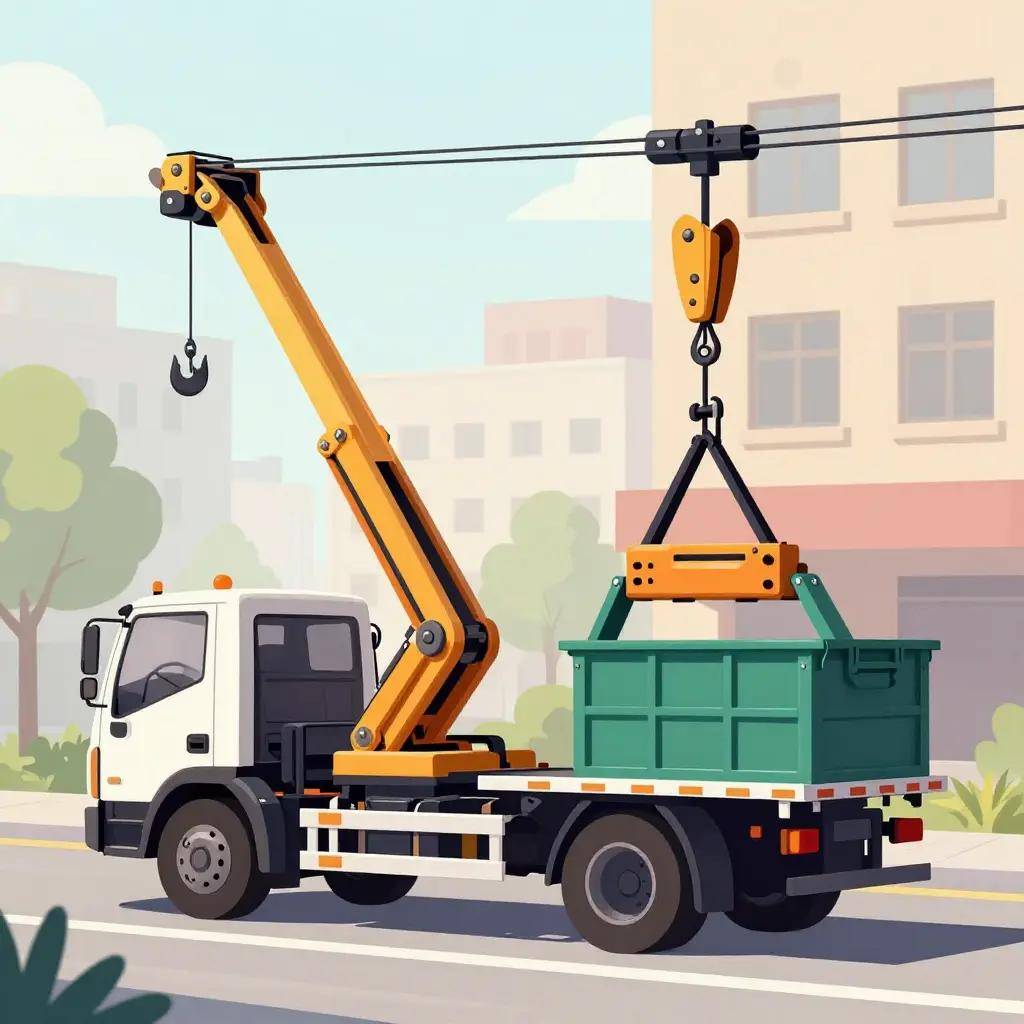
A hooklift truck lets one chassis serve as several vehicles. The key part is an articulated hydraulic hook on a tilting jib, mounted on a carriage that slides along the truck’s subframe. Together they let one operator lift, load, and drop different bodies without rigging anything by hand.
The loading cycle
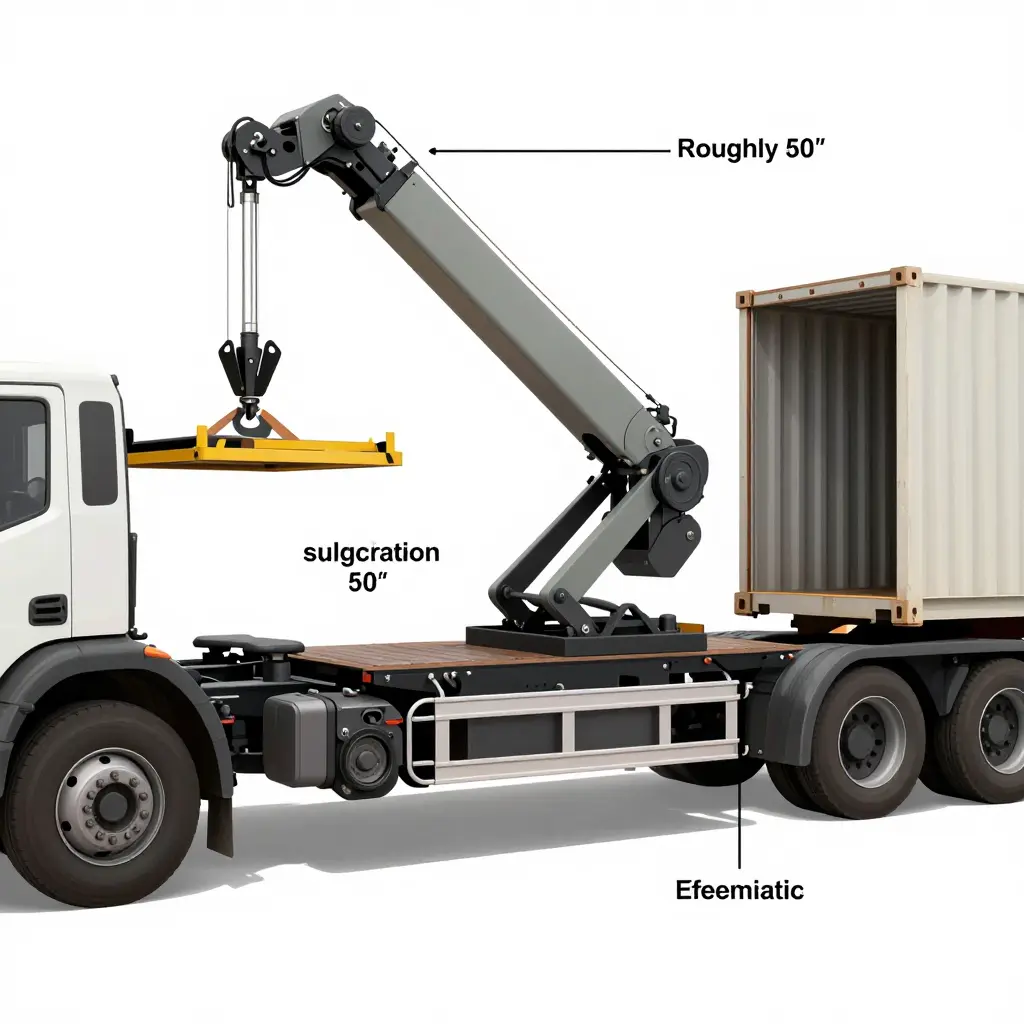
To pick up a bin, the jib tilts back toward the ground to a loading angle of roughly 45 to 55 degrees. The angle matters: it lets the container’s base slide instead of drag or tip. The carriage then travels rearward so the hook can reach the lift bar at the front of the container.
With the hook seated, the hydraulics take over. The hook retracts and the carriage slides forward, drawing the bin up the incline and onto the bed in one controlled motion.
Unloading
Unloading reverses the sequence. The jib tilts, the carriage extends, and the hook sets the body on the ground. The hook releases, and the truck pulls away.
Bin compatibility
Engagement depends on a standard lift bar rather than a fixed frame, so a hook lift system is unusually flexible. It can carry open-top containers, flatbeds, dump bodies, water tanks, and other specialty bodies, often on the same day.
The takeaway
That range is the point. A fixed-body truck carries one payload. A hooklift truck reshapes itself around the job. One truck, many bodies.
How a Cable Hoist Truck System Works
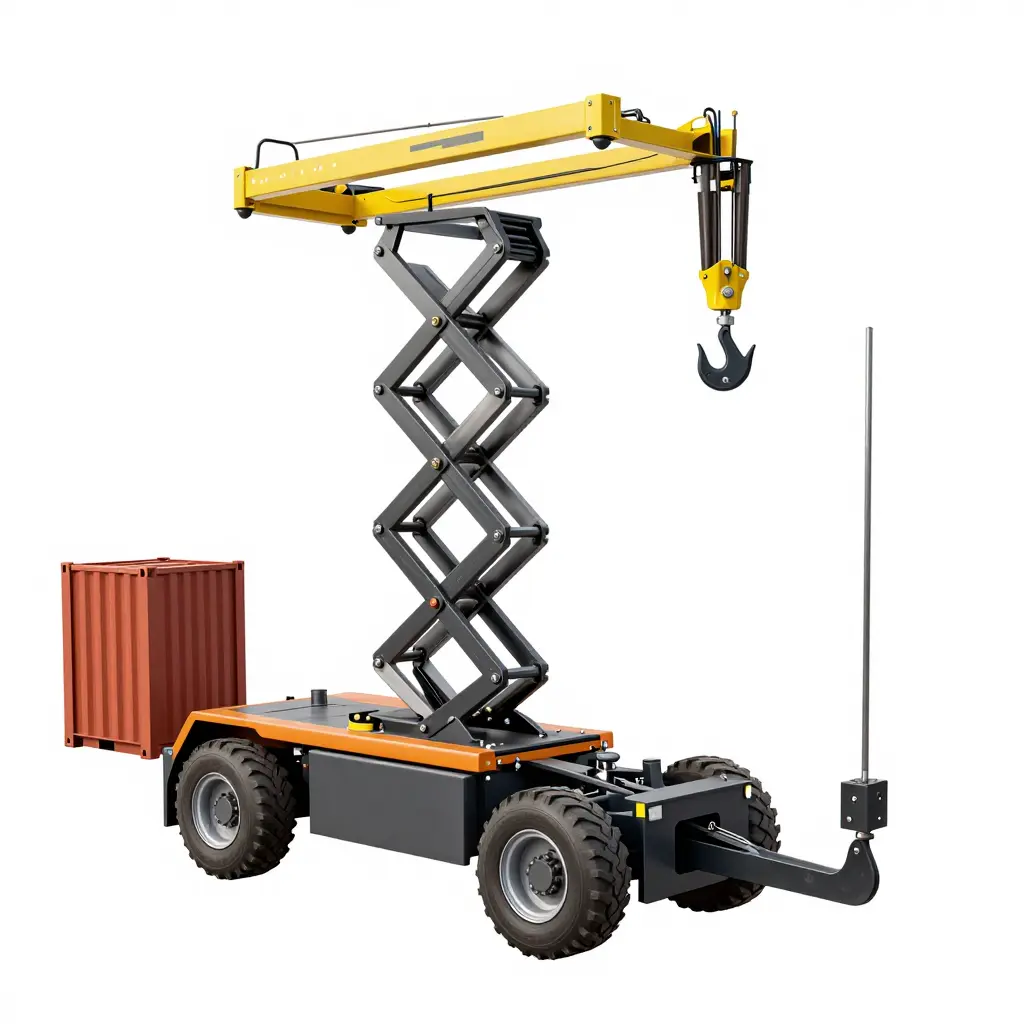
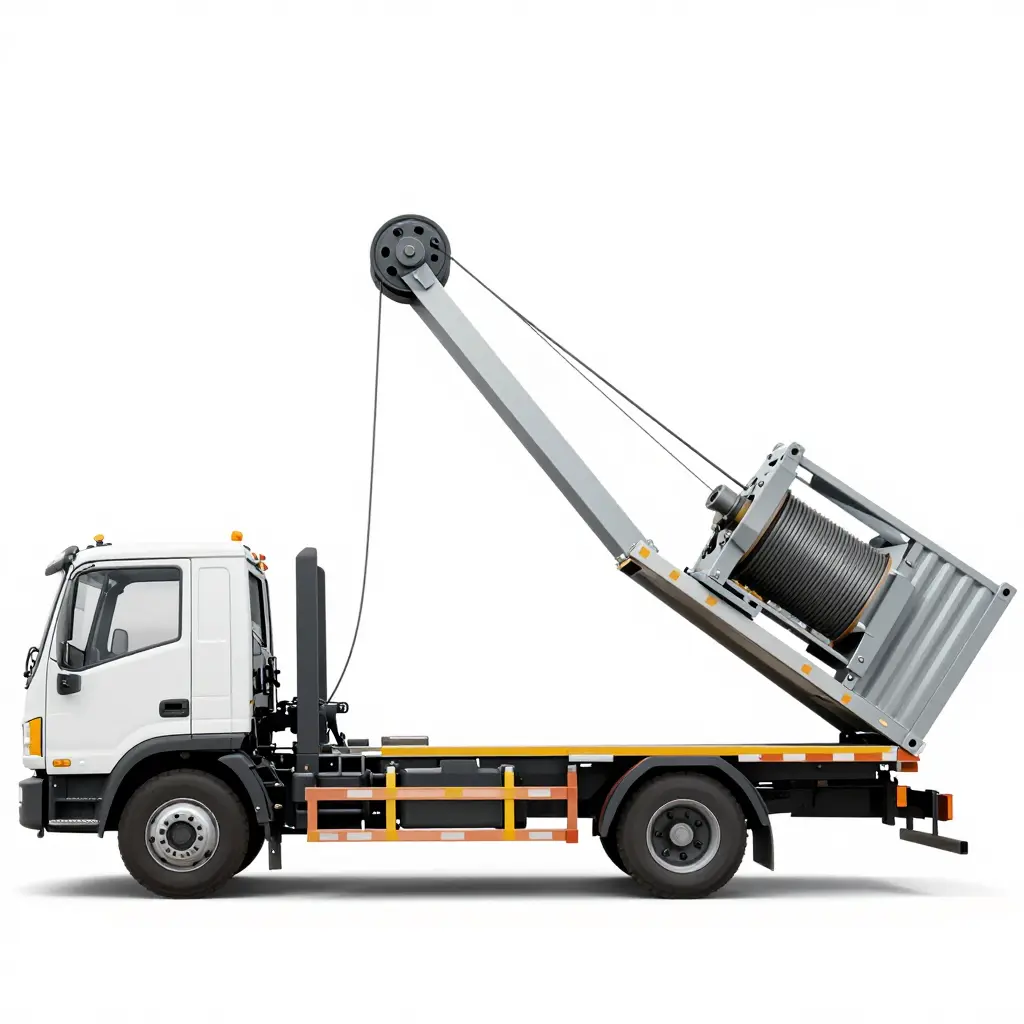
A cable hoist truck moves heavy containers with pulling force rather than lifting leverage. The heart of the setup is the winch, a hydraulic drum mounted at the front of the chassis. Engage it and it reels in a heavy-duty steel cable that runs back to a pulley near the rear of the tilted frame. The cable hooks the front of the bin; as it shortens, the container is dragged up the inclined frame and onto the chassis. A rear locking bar then secures the bin for transport.
Bin Compatibility
A cable hoist is built around one specific container type. A roll-off bin used here has to be reinforced and fitted with rollers along the underside of the frame. Those rollers cut friction as the container slides over the tilted rails, and the reinforced body absorbs the concentrated pull at the cable attachment point. A standard dumpster without rollers simply is not compatible.
Loading Angle vs. a Hooklift
A cable hoist gives the container only one way to travel: straight up the rails, on a fixed line. The tilted frame acts as a ramp, and the winch draws the bin uphill over it, so the truck has to be squared up to the load before the pull begins.
A hooklift does not depend on that ramp for alignment. Its articulated arm finds the lift bar and can pivot the bin into place as it rises, which is why a hooklift performs with heavier, longer containers without demanding a straight-line approach. The cable hoist trades that flexibility for brute pulling power, which is exactly why it holds up under the heaviest loads.
The Takeaway
For dense loads over long distances, the cable hoist remains the rugged, proven choice. Its straightforward winch-and-cable design delivers the pulling force that heavy containers and long-haul work demand, even if it calls for dedicated roller-equipped bins and a little more room to line up the load.
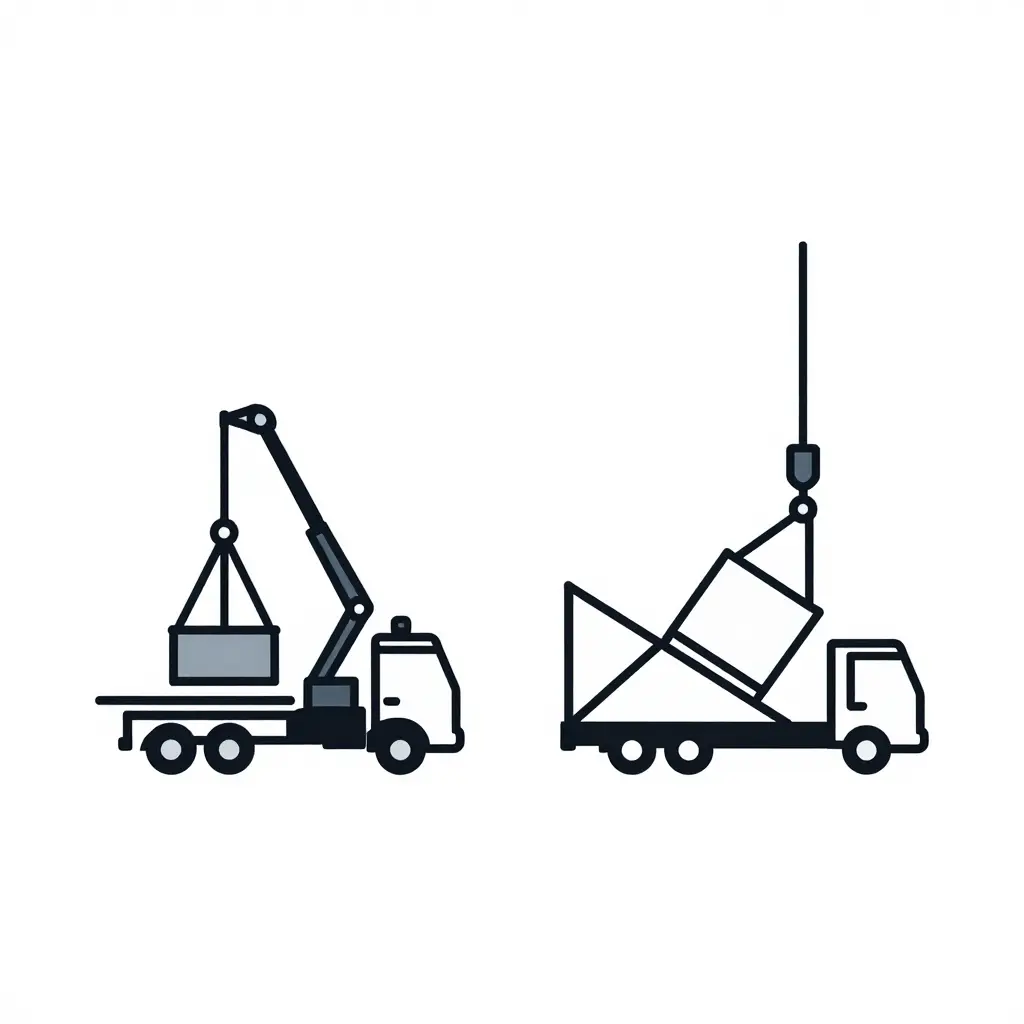
The two loading mechanisms side by side: the jib-lifting action of a hooklift on the left, and the winch-and-cable drag of a cable hoist on the right.
The Mechanics Behind the Match-Up
The numbers make more sense once you see why these two trucks behave so differently on the same city block. The engineering decides everything that follows.
Loading Angle and How the Bin Moves
A cable hoist drags the container up a fixed incline, pulling it along steel rollers with a winch-driven cable. The bin has to arrive lined up with that ramp.
A hooklift does not need it to. Its hydraulic arm takes the load and can swing it into position while the frame tilts, so a bin sitting off to one side or at an angle still goes on. That is the difference that shows up when a truck is working close to a wall or a tight corner.
Hook Points vs. Cable-and-Roller Design
Here the hooklift vs cable hoist distinction stops being abstract.
- Cable hoist: the bin needs a cable eyelet plus heavy rollers and a reinforced floor to survive the drag.
- Hooklift: the bin needs a reinforced hook bar at the front and a sturdy understructure to handle the lift.
Different attachment points, different stress paths, different steel.
What This Means for Bin Compatibility
Because the two mechanisms grab a container in different ways, the bins themselves are not interchangeable. That is the heart of bin compatibility: a cable-hoist container and a hooklift container are built to different specs, and a truck set up for one usually cannot safely handle the other.
For a single operator swapping bins alone, that is a hard constraint. It decides which containers you can load, drop, and reuse without a second pair of hands or a second truck.
The table below lays out those differences side by side.
Operational Efficiency on Tight City Blocks
When one driver works dense urban routes, geometry usually beats tonnage. On tight city blocks, the winner is the truck that approaches a bin cleanly, turns in less space, and finishes the swap faster. Here is how a hook lift system and a cable hoist system handle that pressure.
Approach angle
A hook lift system uses a hydraulic hook and tilting jib, so the truck can engage a bin from an offset. A cable hoist system drags the container up its rails with a winch cable, and that cable pulls along one fixed line. The cable unit wants a straight, squared-up approach; the hooklift will take a crooked one. On tight city blocks, that is the difference between one pass and three.
Turning footprint
Both platforms ride on long-wheelbase trucks, so the raw turning footprint is broadly similar. The gap opens up in repositioning. Because the hooklift can work off-axis, the driver makes fewer back-and-forth shuffles, which shrinks the practical footprint of the swap itself.
Loading from awkward positions
Bins rarely sit square. A hook lift system can grab a container rotated 15-20 degrees off the truck’s centerline and straighten it as it rises. A cable hoist system tends to pull sideways when misaligned, risking a skewed rail engagement that forces the driver to reset and re-approach.
Alley access
In dead-end alleys with little run-up, reverse approach distance matters. Single driver bin swapping favors the hooklift here, which can often lift and rotate with less linear clearance than a cable unit dragging along its rails.
Cycle time and swaps per day
This is where the totals separate. Cycle time is not just the lift; it is approach, positioning, lift, and depart. Fewer repositioning moves compound quickly across a route.
| Metric | Hook Lift System | Cable Hoist System |
|---|---|---|
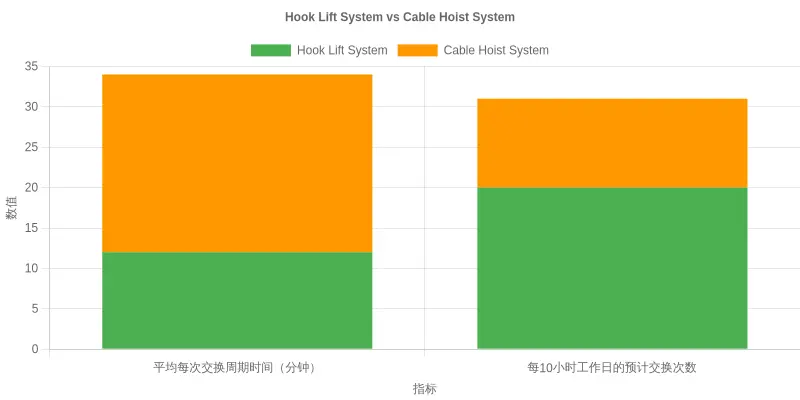
| Average cycle time per swap | ~12 min | ~22 min |
| Estimated swaps per 10-hour day | ~20 | ~11 |
The chart below compares these two figures directly.
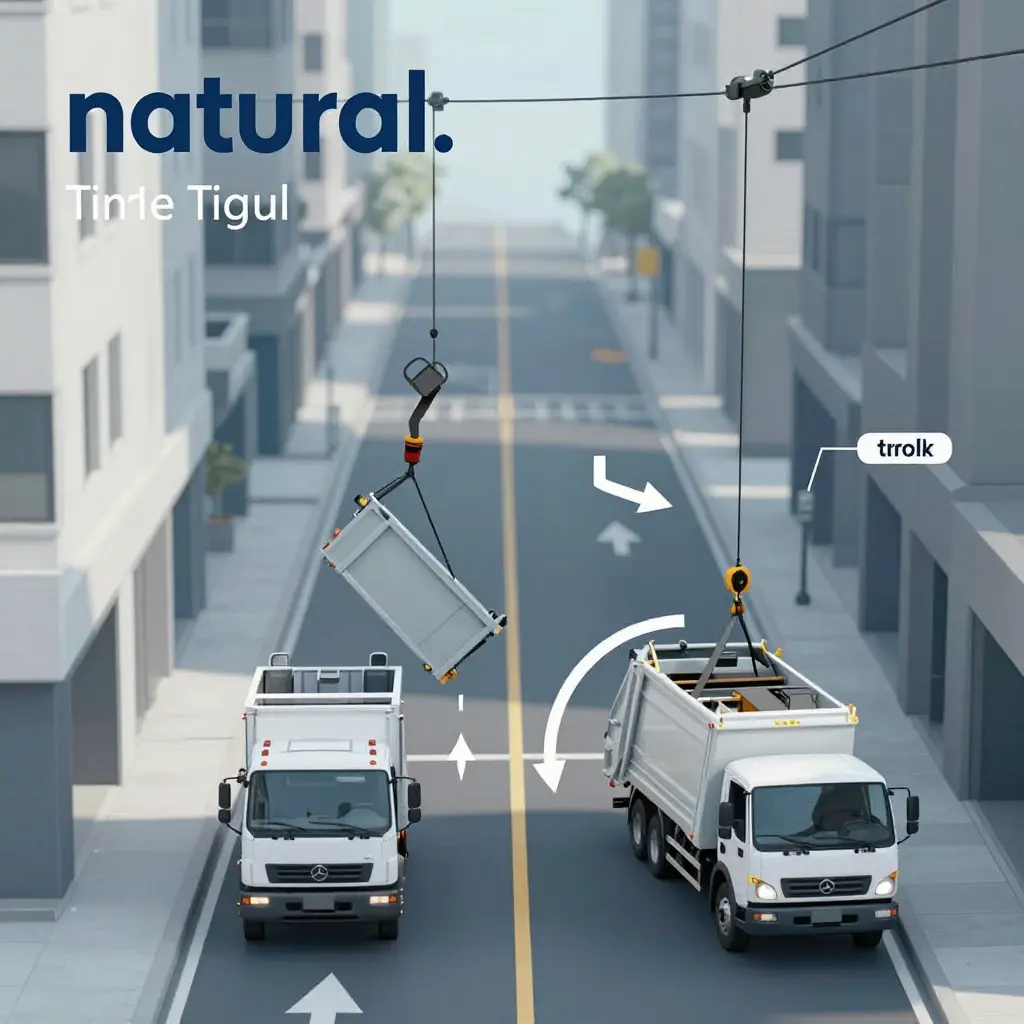
The diagram below illustrates how each system’s approach angle and turning footprint differ on a narrow block.
The bottom line
On tight city blocks, maneuverability and cycle speed decide productivity, not raw capacity. A truck that can hook an awkward bin from a bad angle and pull out in one motion fits more stops into a shift. For a single driver trying to clear a dense route, the extra cubic yards a bigger bed offers rarely show up on the day’s ticket. The minutes saved at every curb do. Test your candidate systems against real-world cycle times before you commit to a platform.
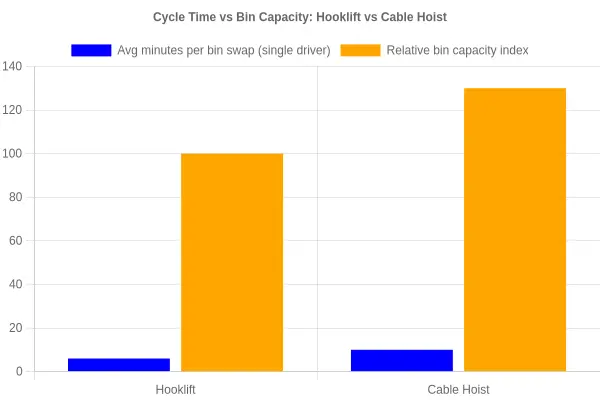
The chart above puts both systems on one numerical scale so the trade-off is visible at a glance. Lower bars on the blue series are better; higher bars on the orange series are better.
- Hooklift posts a faster swap cycle but a lower relative capacity index (100). That makes it the stronger choice when a single driver is threading through tight city blocks and needs quick, frequent exchanges.
- Cable hoist is slower on the clock yet its capacity index climbs to 130, which favors heavier, denser loads that justify fewer but bigger pulls.
In short, the hooklift wins on frequency and tight-block agility, while the cable hoist wins on raw load weight.
Cost, Maintenance, and Total Cost of Ownership: Hooklift vs Cable Hoist
Buyers tend to fixate on the sticker price of a hooklift truck versus a cable hoist truck. The number matters, but over five to seven years the total cost of ownership decides the question. Compare the two on acquisition, upkeep, wear parts, downtime, and resale.
Acquisition Cost
A cable hoist truck usually wins on day one. A new cable hoist setup typically runs about $95,000-$150,000, because the winch-and-cable mechanism is simpler and lighter.
A comparable hooklift truck tends to land between $120,000-$185,000, reflecting the cost of its hydraulic jib, telescopic arm, and stronger subframe. You pay a premium up front for flexibility.
Maintenance Routines and Wear Components
Here the two diverge sharply. A cable hoist truck leans on its winch and steel cable, and both are consumable by design.
- Cable wear: cables stretch, fray, and corrode, often needing replacement every 12-24 months at roughly $400-$1,200 per replacement.
- Winch service: drum, clutch, and roller maintenance adds $500-$1,500 annually.
A hooklift truck instead wears on its hydraulic jib and hook. These cost more individually but typically last longer.
- Hydraulic service: fluid, filters, hoses, and seals average $600-$1,800 per year.
- Hook wear: the lifting hook and container bar may need reconditioning every 3-5 years at $800-$2,500.
Downtime Risk
A snapped cable stops work and can injure staff, producing unplanned downtime of half a day to two days. A hydraulic failure is rarer but costlier to fix when it happens.
On tight city blocks with a single driver, predictability matters more than the price of a part. Hooklift systems generally deliver fewer surprise stoppages because they avoid the constant cable fatigue a hoist endures.
Resale Value
Hooklift trucks hold value well, retaining roughly 55%-70% of purchase price after five years, since they handle multiple container types and stay in demand.
Cable hoist trucks often resell for about 40%-55%, as the specialized winch system narrows the buyer pool. A truck with fresh cables and a rebuilt winch, though, can close the gap.
The Bottom Line for Fleet Managers
Over five years, the total cost of ownership curves converge closely. A cable hoist truck saves $20,000-$35,000 up front but bleeds more into cables, winches, and downtime. A hooklift truck costs more initially yet rewards operators with steadier uptime and stronger resale.
Choose the cable hoist truck if budget is tight and routes are simple and short. Choose the hooklift truck if you swap varied bins, chase reliability, and want higher resale. For a single driver working tight city blocks, the hooklift’s lower downtime risk usually justifies the premium.
Key Decision Factors for a Single-Driver Fleet
- Daily swap volume – The higher your container turnover, the more a hooklift vs cable hoist comparison tilts toward the hooklift, since one operator can grab, tip, and drop bins without re-rigging cables between stops.
- Available bin types – Cable hoists are built around rear-roller roll-off boxes, while hooklifts accept hook bins, flatbeds, and specialty bodies, so the platform dictates what fleet you can actually sell.
- Alley and tight-block access – For tight city blocks, the hooklift’s articulating arm and shorter approach geometry let a single driver spot bins in gaps a straight-frame cable hoist simply cannot reach.
- Payload range – Match rated capacity to your heaviest legal load; cable hoists often win on raw tonnage, while hooklifts win on versatility across mixed, lighter containers.
- Driver ergonomics – In-cab controls, reduced manual handling, and no winch wrestling matter enormously when one person runs the route all day.
- Service and parts availability – Standardized hooklift hydraulics and widely stocked wear parts shorten downtime; confirm local dealer support for whichever platform you buy, because a single driver has no backup truck.
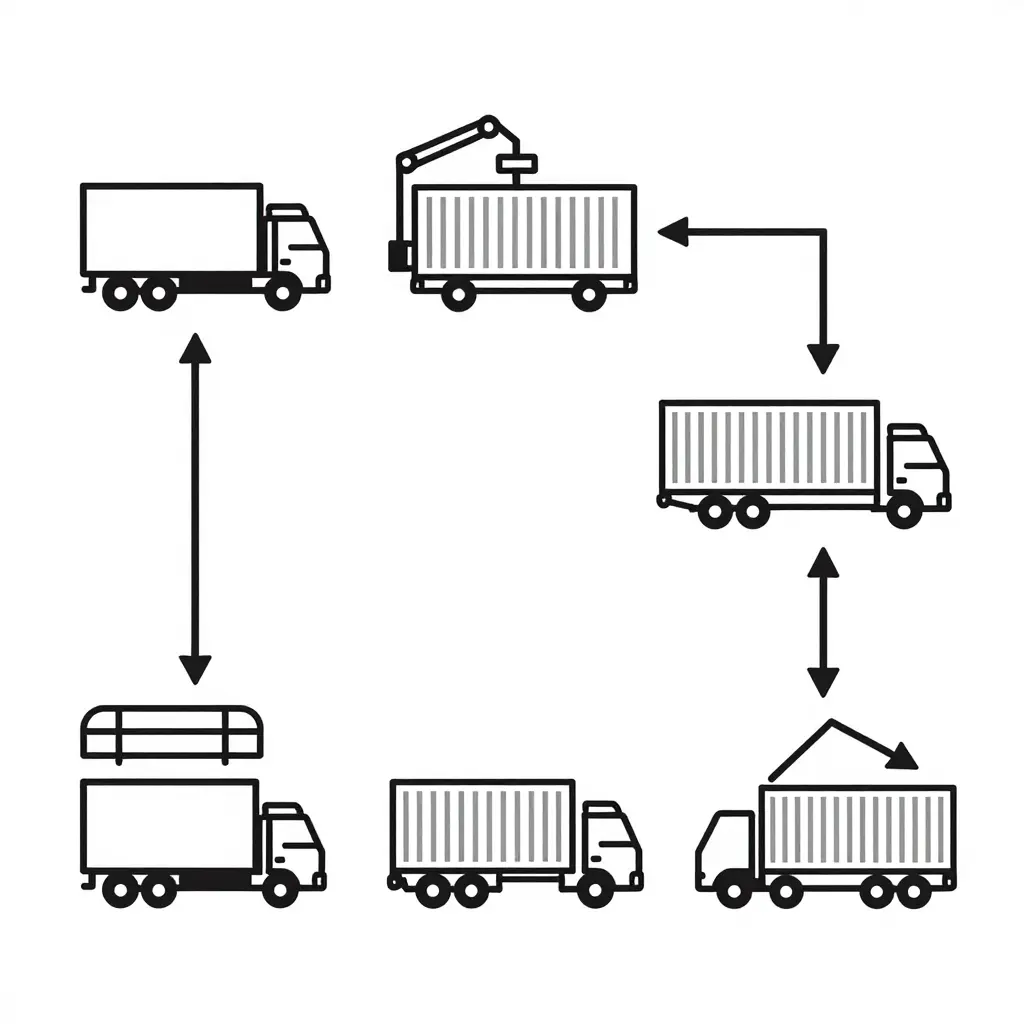
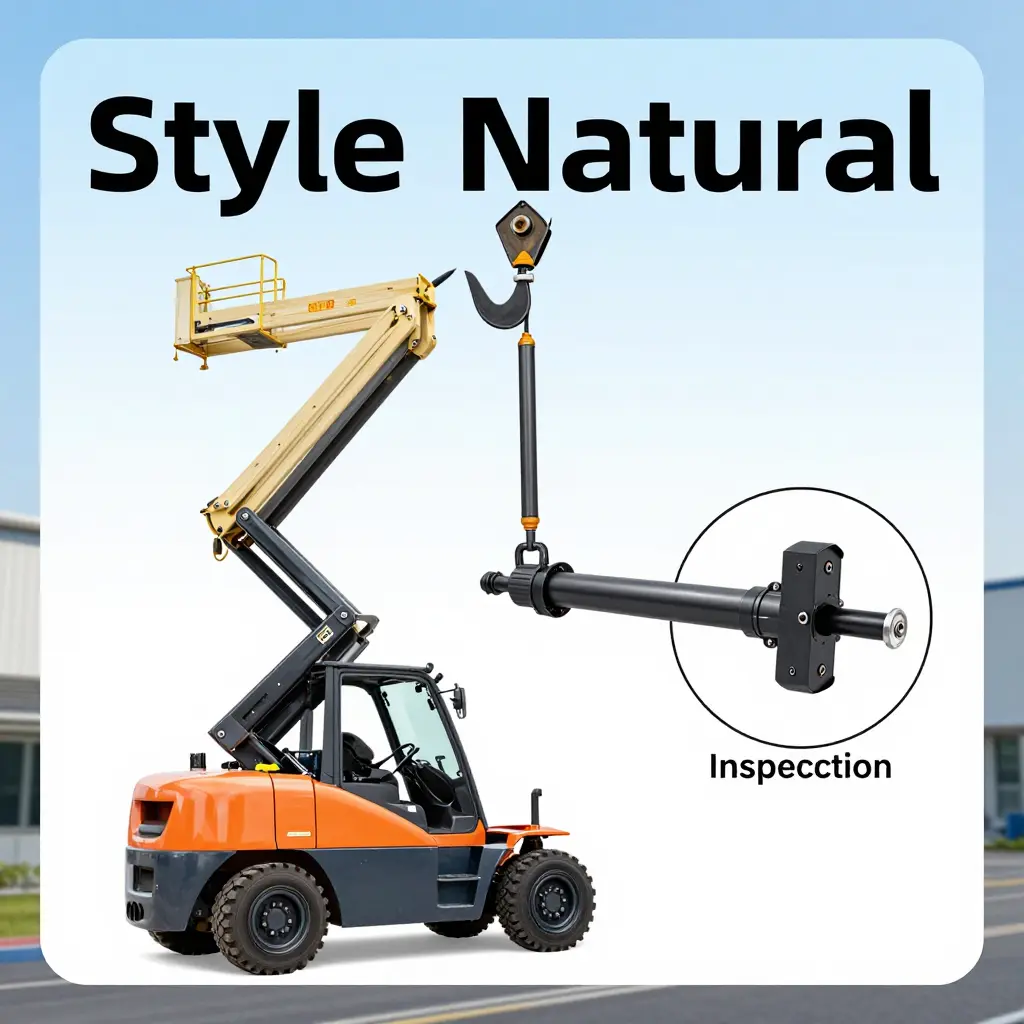
Every single-driver swap follows the same six steps: approach, engage the bin, load, secure, transport, unload. The steps look identical whichever truck you run. The difference is where they slow down or force the operator out of the cab. On a hooklift, engaging and loading run through an articulated arm and tilt frame the driver can often control from the seat. On a cable hoist, the same steps depend on a winch, cable, and sheave hauling the bin up its rails. The workflow does not change; the time, cab exits, and repositioning for each step do. Watch the sequence on a tight city block and you can see which system keeps the driver in the seat and which one adds steps.
Single-Driver Ergonomics and Safety on Tight City Blocks
For a single driver working curb-to-curb on tight city blocks, the real difference between a hooklift truck and a cable hoist truck shows up less on the spec sheet than in the cab and the few feet around the rails. Both systems demand the same discipline, but their ergonomics and failure modes affect operator safety in different ways.
In-cab controls and visibility
A hooklift truck typically offers joystick or push-button proportional control mounted inside the cab, letting the operator raise, extend, tilt, and dump the subframe without leaving the seat. A cable hoist truck tends toward a simpler lever set for the winch and tilt frame, but the driver still has to get out often to guide the cable and seat the hook on the container. Every trip in and out of the cab on a tight block puts the operator in traffic, so fewer exits make for a safer cycle. Visibility matters too: high-mounted mirrors and a rear-facing camera are essential because both trucks carry a blind zone immediately behind the tailgate, where a pedestrian can disappear in a heartbeat.
Failure modes: cable versus hydraulic
Hydraulics on a hooklift tend to fail gradually – leaking seals, slow rams, a sinking tilt – and usually warn before they strand you. A cable hoist truck relies on steel cable and a winch; a single frayed strand or a snapped cable can whip with lethal force and drop a loaded bin without warning. Pre-shift inspection of cable, sheaves, and hook wear is not optional on either system.
Container stability during loading
A hooklift’s tipping frame holds the bin captive through the lift, which helps on crowned or rutted pavement. A cable hoist drags the container up a ramp angle, so an unbalanced or overloaded bin can shift mid-pull. Load evenly, keep the tailgate clear, and never lift over a slope you would not walk.
Working near pedestrians and parked vehicles
In dense streets, set the truck, spot your zone, and commit before you touch a control. Chock the wheels, use a spotter when backing into a tight bay, and treat every blind spot as occupied.
Takeaway: Whichever hoist you run, safety on a tight block is a routine, not a feature. Inspect daily, control the zone, and assume someone is always standing where you cannot see them.
FAQ: Hooklift vs Cable Hoist for Single-Driver Bin Swapping
Which system is faster for frequent swaps?
A hydraulic hooklift generally wins on raw speed, because the jib and tilt frame do the work while the driver stays in the cab for most of the sequence. A cable hoist needs the operator to connect the cable and manage the winch on every pick-up and drop-off, which adds time to each cycle. For high-frequency single driver bin swapping across a long route, those saved minutes compound into real hours by the end of the week.
Which handles tighter city blocks?
The hooklift usually has the edge. Its articulated arm can engage a bin that is not lined up with the truck and correct it during the lift, so it needs less room to set up. A cable hoist pulls along a fixed line and wants a straight, squared-up approach, which is hard to get in a narrow lane or a dead end. A short-wheelbase hooklift is the easier truck to place in a cramped block, though a cable hoist can still work where the driver has a clear straight shot.
Can one truck use both bin types?
No – standard hooklift and cable hoist bins are not interchangeable, because each body is built to match a specific lifting mechanism. Some manufacturers build combination units that accept both hooks and cables, but those hybrids add cost, weight, and moving parts that can complicate routine maintenance. If you expect to run only one bin style, a dedicated body is usually the simpler, more reliable choice.
Which has lower maintenance costs?
Cable hoists have a reputation for lower upfront and routine maintenance costs thanks to their simpler winch-and-sheave design. The trade-off is that cables stretch, fray, and eventually need replacing, and a snapped cable can be a safety issue. Hooklifts carry more hydraulic components, but typically fewer fast-wearing consumables, so long-term costs depend heavily on how hard you work the truck.
Which suits a single-operator dumpster rental business?
For most solo operators, a hooklift is the more versatile platform because it can carry open-top containers, flatbeds, and specialty bodies on the same chassis. That flexibility lets one person serve more jobs without buying extra trucks, which matters when labor is your biggest constraint. If your business is built around heavy, sealed cable bins and tight alleys, a cable hoist can still be the leaner, cheaper starting point.
How much payload do I give up with each system?
Hooklift bodies tend to be heavier, so they can eat into available payload compared with an equivalent cable hoist. Cable hoists often allow a bit more net capacity, which can matter when you haul dense debris like concrete or dirt. Always check the chassis GVWR and body weight before you buy, since the hooklift vs cable hoist payload gap changes with each build.
The Verdict: Hooklift or Cable Hoist for a Single Driver on Tight City Blocks?
Weigh hooklift vs cable hoist for one operator on cramped urban streets, and the evidence points one way. For a single driver swapping bins on tight city blocks, the hooklift wins on the vast majority of everyday municipal and commercial routes. Its articulated jib, off-axis engagement, and ability to handle multiple container lengths give one person the freedom to drop, swap, and reposition bins without a spotter or a second set of hands. When alleyways are narrow, curb space is scarce, and turnaround time decides your daily stop count, that mechanical advantage turns directly into fewer delays, less repositioning, and lower risk of injury – a decisive edge on both efficiency and safety.
That said, the cable hoist still wins under specific conditions. If your operation hauls heavy, sealed roll-off containers over longer distances, prioritizes maximum payload capacity, and rarely needs to handle mixed bin sizes, the cable hoist’s simpler, lighter mechanism and lower upfront cost make it the more economical choice. On wide industrial sites with ample maneuvering room, its rugged simplicity is hard to beat.
Pull the earlier points together and the logic is simple. The mechanism favors the hooklift wherever precision and versatility matter; the cable hoist favors brute capacity and simplicity. Purchase price tilts toward the cable hoist, but total cost of ownership can swing to the hooklift once you account for one-driver labor, faster cycle times, and fewer damaged bins. Safety leans toward the hooklift’s controlled lifting.
At CRRC, we back every vehicle with a strict quality system and a dedication to manufacturing durable, reliable, cost-effective special vehicles, including sanitation vehicles and garbage trucks, for global clients such as waste management operators.
Bottom line: if you are running solo on tight city blocks and swapping mixed bins all day, buy the hooklift. Choose a cable hoist only when heavy, uniform roll-off containers and long hauls define your work. For nearly every single-driver, space-constrained collection route, the hooklift remains the safer, more flexible, and ultimately more profitable bet.