Hook Lift Systems for Trucks: Why Cold Morning Lifts Stall and How the Relief Valve Sets Cycle Time
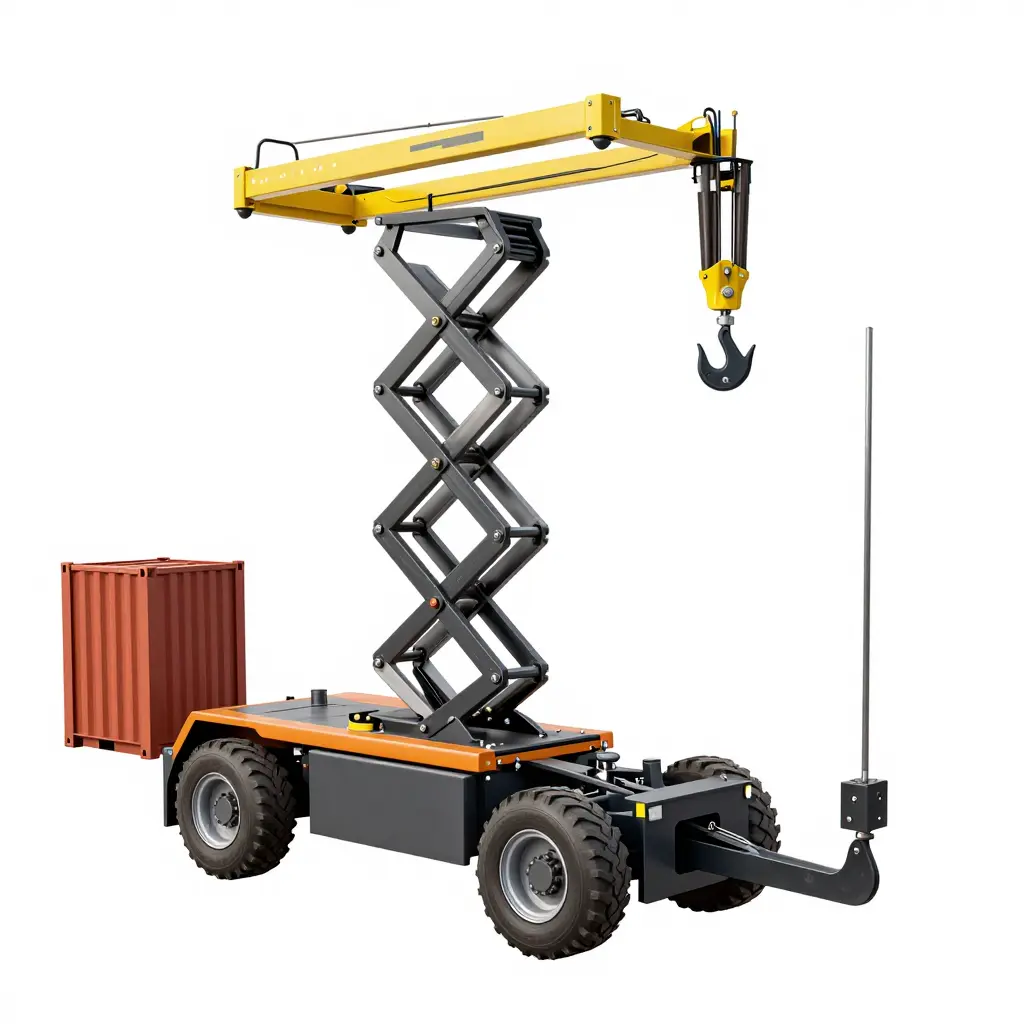
A hook lift turns one truck chassis into a container handler. A hydraulic lift cylinder drives a pivoting jib and hook that grabs a container, rolls it onto the subframe, tips it to dump, and sets it back down. In waste collection, that means one truck can swap dozens of bins per shift without a trailer or crane. On a construction site, the same motion moves debris boxes, spoil containers, and material skips. Cable hoists drag containers on and off; a hook lift uses a powered arm instead, so its performance depends on clean, correctly tuned hydraulics. Not sure which platform fits your fleet? Review how hook lift trucks differ from cable hoists.
If you own or operate these trucks – or you are the technician who keeps them running – you already know the two headaches this guide tackles.
- Cold morning lifts stall. When temperatures drop, cold hydraulic oil thickens, flow resistance rises, and the lift cylinder can balk or stall mid-stroke.
- The relief valve setting sets the cycle time. Set it too low and the lift crawls; too high and you stress the pump, hoses, and cylinder.
Cycle time is not fixed. It depends on hydraulic pressure limits and operating temperature, which is why a lift that flies at noon can stall at dawn – not because the truck is broken, but because the relief valve and oil viscosity interact differently in the cold.
Why Cold Morning Lifts Stall: The Physics Inside Hook Lift Hydraulics
Every winter, operators meet the same frustration. You start a hook lift truck at dawn, pull the lever, and instead of a confident lift the cylinder groans, creeps, and dies halfway up. It feels random. It isn’t. When a cold morning lift stalls, a specific chain of fluid behaviors is stacking up against you. Here is what happens inside hook lift systems for trucks.
Cold Oil Is Thick Oil
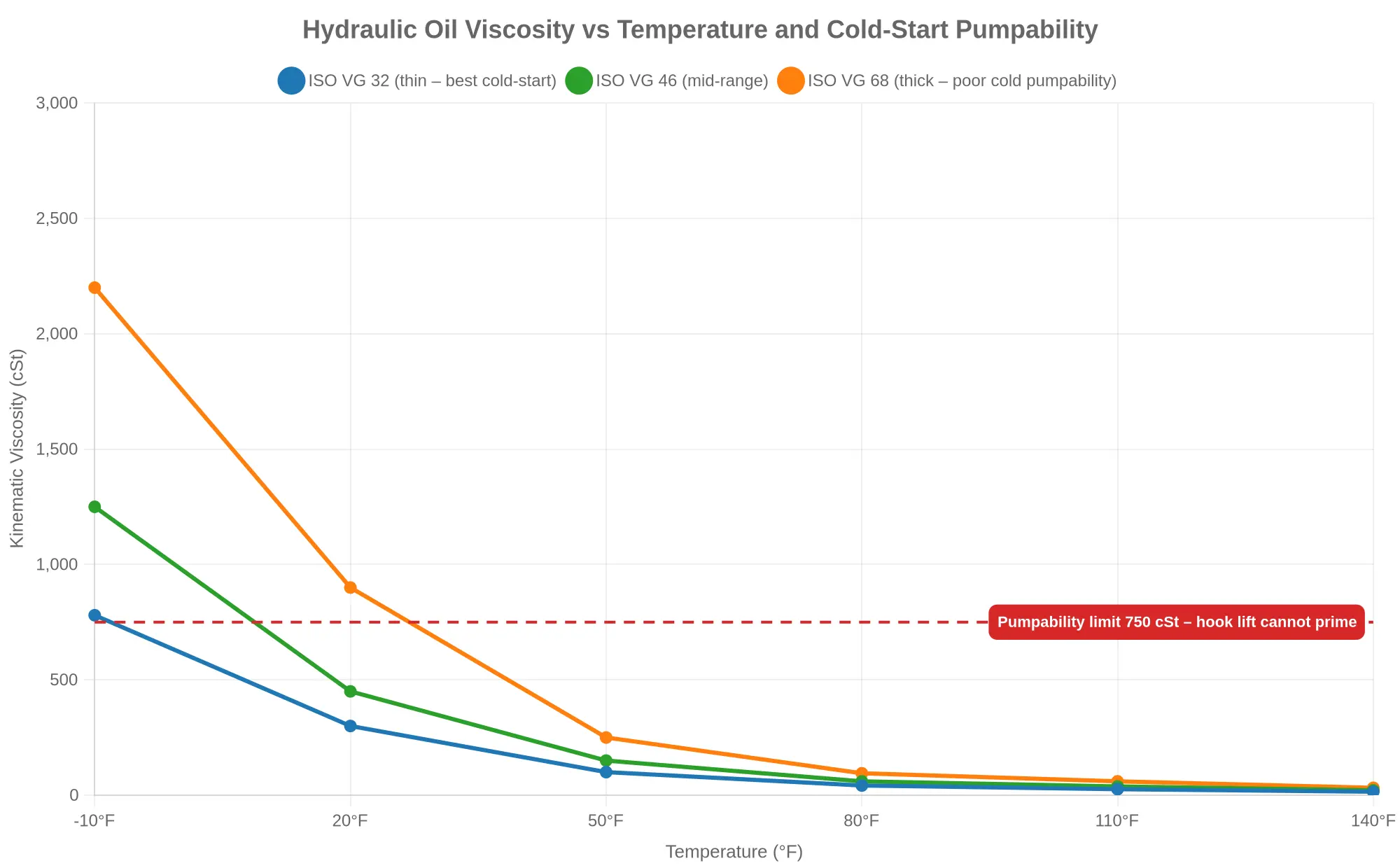
Viscosity is a fluid’s resistance to flow, and hydraulic oil’s viscosity climbs steeply as temperature falls. Oil rated at roughly 46 cSt at 40°C (104°F) can thicken past 1,000 cSt near freezing. That thicker fluid drags through every line, filter, and orifice, so the pump must work harder to move the same volume. Flow rates fall, and everything downstream slows.

Slow Priming and Suction Starvation
The pump doesn’t push oil; it creates a low-pressure zone and atmospheric pressure pushes oil in. Thick oil resists that draw. The inlet can’t refill the pumping chambers fast enough, so the pump runs starved and delivers an erratic, gurgling stream instead of solid flow. On a frosty morning, this suction starvation is often the first stall you notice.
Air Entrainment and Cavitation
When inlet pressure drops too low, dissolved air comes out of solution and vapor pockets form. Those bubbles collapse violently as pressure rises on the discharge side – a phenomenon called cavitation. It produces the characteristic rattle, damages pump internals, and further cuts effective output.
Cold-Induced Pressure Spikes
Cold oil also exaggerates pressure. Pushing thick fluid through tight clearances and cold, partially blocked filters raises resistance, so the system sees higher pressure for the same load. Every restriction becomes a bottleneck, and the pressure reading climbs faster than the physics of the load alone would predict.
Where It All Converges: The Relief Valve
This is where it comes together. A relief valve protects the circuit by opening at a set pressure. In cold conditions, the accumulated backpressure and sluggish flow can push the system to that set point before the cylinder has finished traveling. The valve cracks open early, dumps flow straight back to tank, and the lift stalls mid-cycle. That premature opening is why hydraulic cycle time can stretch from seconds toward minutes on a frosty morning.
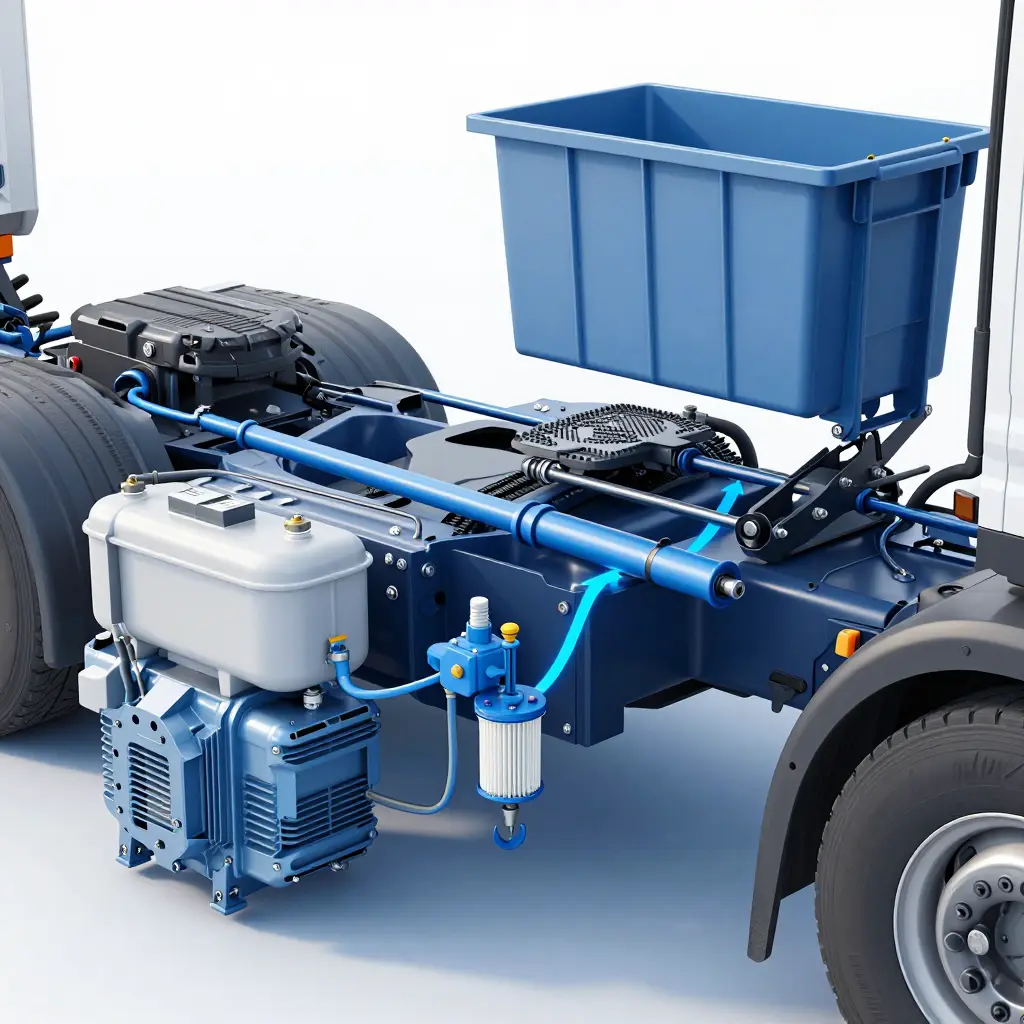
The fix blends a warm-up idle before you demand full lift, the correct oil grade for your climate, and verifying the relief valve setting against the manufacturer’s spec. If you suspect hardware wear is compounding the problem, run careful subframe and lift cylinder checks before blaming the weather.
Cold oil is thick, thick oil starves and aerates the pump, and the relief valve then caps the cycle early. Warm the system, use the right fluid, and confirm your valve setting, and your morning lift will behave the way it does at noon.
Where Hook Lift Stalls Actually Cluster: The Temperature Evidence
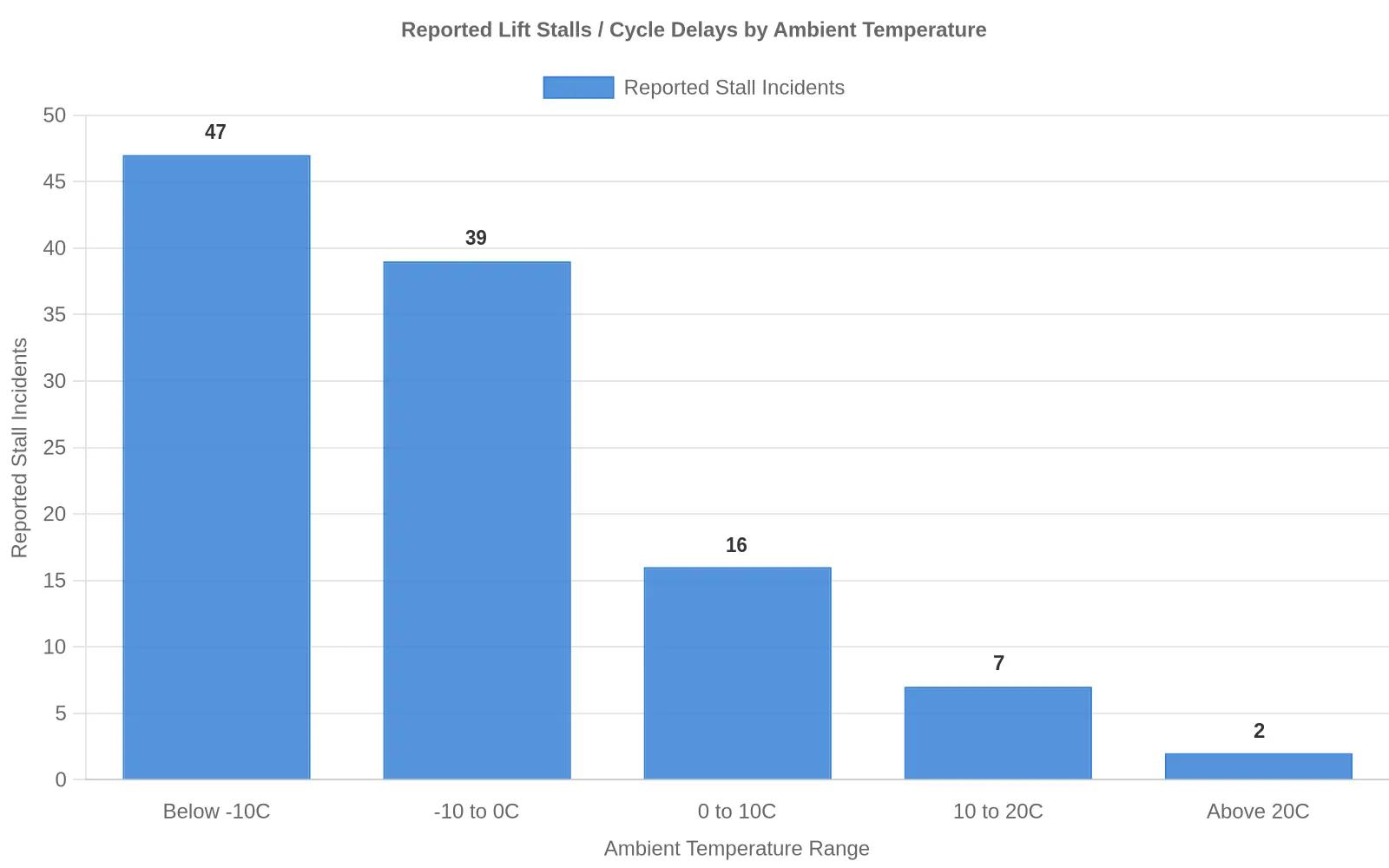
If cold-weather stalls were a coincidence, the incidents would scatter evenly across the calendar. They do not. Plot reported lift stalls and cycle delays against ambient temperature, and the failures stack up hard in the cold and thin out dramatically as the thermometer climbs.
The bar chart below shows incident distribution across five ambient ranges. At or below 0°C, operators logged 86 of 111 reported stalls, and the worst single band sits below -10°C.
Reading the Trend
| Ambient Range | Reported Stall Incidents | Share of Total |
|---|---|---|
| Below -10°C | 47 | 42% |
| -10 to 0°C | 39 | 35% |
| 0 to 10°C | 16 | 14% |
| 10 to 20°C | 7 | 6% |
| Above 20°C | 2 | 2% |
The pattern is consistent. The two coldest bands account for just over three-quarters of all incidents (86 of 111). Above 20°C, the problem all but vanishes.
Why Temperature Drives the Failure
Hydraulic oil viscosity is heavily temperature-dependent. As ambient temperatures drop overnight, the oil in the reservoir thickens, and a cold morning start pushes that high-viscosity fluid through narrow passages before it has a chance to warm. The result is predictable:
- Restricted flow slows the lift cylinder’s extension, stretching cycle time and, in severe cases, stalling the sequence entirely.
- Pressure spikes build against a relief valve that was set for warm-weather flow rates, so the valve cracks early and dumps pressure you actually needed.
- Pump strain increases as the system fights thick fluid, often triggering the stall right at the point of maximum load.
The clustering in the coldest bands points to cold oil, not worn hardware. That tells you where to look first: the fluid and the relief valve setting, not a failing cylinder. Before chasing a mechanical fault, work through the subframe and lift cylinder checks so you can rule out genuine wear and confirm the cold is doing the damage.
How the Relief Valve Setting Governs Cycle Time
On any hook lift system for trucks, the relief valve is the hydraulic circuit’s pressure governor. It caps the maximum pressure the pump can build, and that ceiling decides how forcefully the lift cylinder can push a bin up the rails. Because cycle time is simply how long that push takes, the relief valve setting directly controls how quickly – or whether – a lift finishes.
Within the normal working range, the relationship is straightforward. A higher relief valve setting lets the cylinder develop more force, extending the rod faster and shortening the cycle time. A lower setting clips that available force, so the cylinder creeps or stalls under a heavy load. Cycle time, then, is never a fixed number; it is the balance between the pressure you permit and the force the load demands.
Setting too low versus setting too high
- Too low: weak hydraulic force produces slow extension and a cycle that stalls before the bin clears the rails, especially with a full or saturated waste load.
- At specification: full rated load capacity, optimal lift speed, and a repeatable cycle time you can schedule around.
- Too high: over-pressurized seals, hoses, and cylinder walls. You may shave a second or two off the lift, but you gamble on blown seals, burst hoses, and scored or cracked cylinder rods.
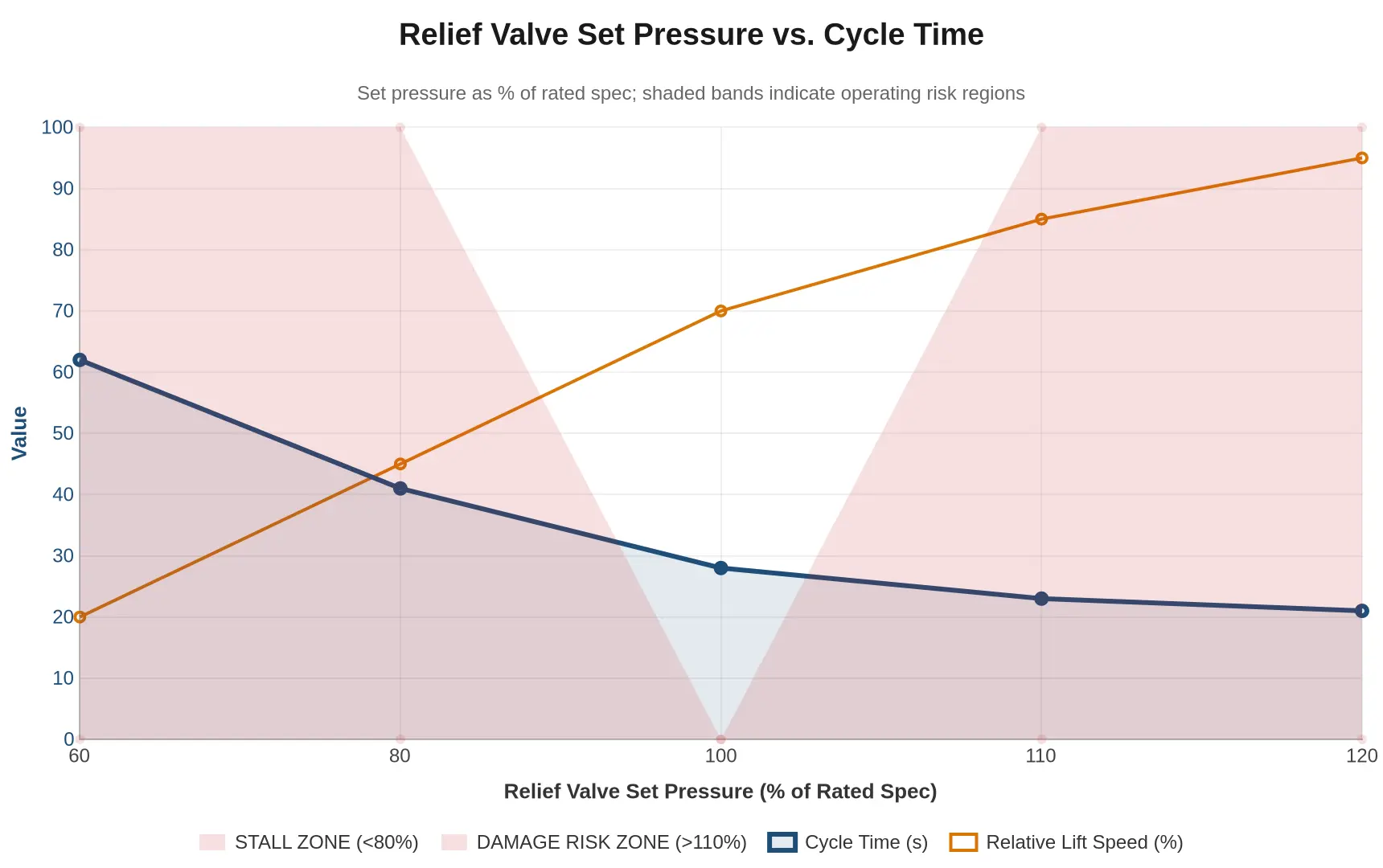
The chart above shows the pattern: cycle time falls steeply as set pressure climbs toward spec, then flattens out. Beyond the spec point, extra pressure buys almost no speed while risk rises sharply.
Why cold mornings stall the lift
Hydraulic oil thickens as temperatures drop. On a cold morning that higher viscosity raises flow resistance, so the system reaches its relief valve setting at a lighter load and the valve opens earlier, bypassing oil back to the tank. The result is a sluggish or stalled cycle even when the setting is technically correct. Warming the oil or verifying the setting against cold-weather specifications restores a normal cycle time – but never crank the valve past the manufacturer’s limit. Routine subframe and lift cylinder checks keep these tolerances in range before they turn into a stalled lift.

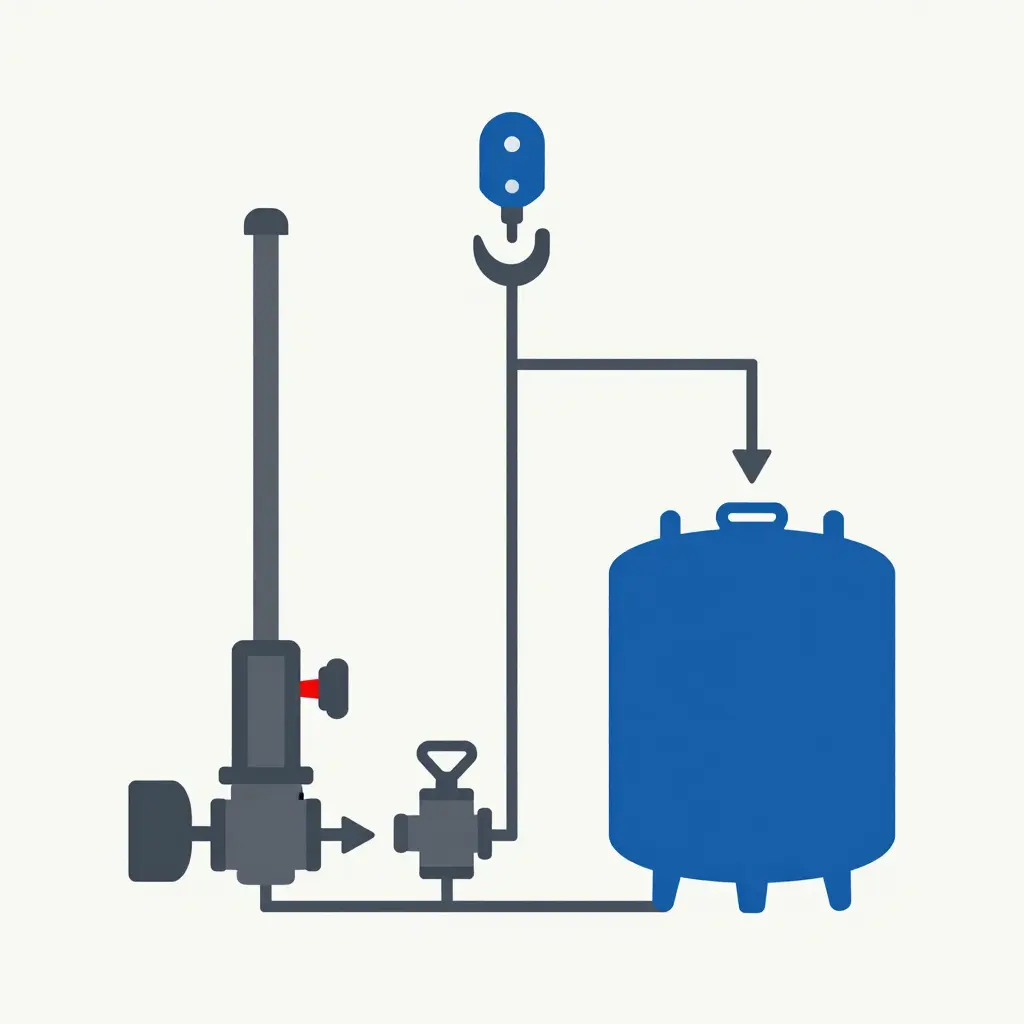
Reading the schematic: where the relief valve lives. The diagram above traces the full pressure path in a typical hook lift circuit. Fluid is drawn from the reservoir by the pump, routed through the control valve, and directed to the lift cylinder that raises the subframe. The relief valve sits on the pressure side of the circuit, teed off the main line between the pump and the control valve (or integrated into the valve body itself).
When cold, thick oil spikes pressure faster than the cylinder can relieve it, the relief valve cracks open and dumps the excess flow straight back to the reservoir instead of stalling the lift. That venting action protects the pump and hoses, but it also sets your cycle time: a lower relief setting vents sooner and lifts slower, while a higher one holds more pressure for a faster, stronger stroke. Getting that spring setting right is the difference between a snappy cold-morning lift and a truck that groans and refuses to move.
The relief valve is the most consequential adjustment on a hook lift’s hydraulic circuit, because it dictates both how hard the system works before it bypasses and how long a cold-morning lift takes to complete.
| Relief Valve Setting (bar/psi) | Expected Cycle Time | Lift Capacity | Cold-Start Stall Risk |
|---|---|---|---|
| 180 bar / 2,610 psi (under-set) | Slow, roughly 38-45 sec | Reduced – struggles with heavy or wet bins | Low – fluid bypasses before the engine loads up |
| 200 bar / 2,900 psi | Moderate, roughly 30-35 sec | Adequate for most standard bins | Low to moderate |
| 220 bar / 3,190 psi (optimal) | Crisp, roughly 22-28 sec | Full rated capacity across temperature range | Minimal when fluid is warm; watch cold starts |
| 240 bar / 3,480 psi | Fast, roughly 18-22 sec | Full capacity with margin | Moderate – high pressure spike at first cold lift |
| 260 bar / 3,770 psi (over-set) | Very fast, under 18 sec | Maximum, but stresses seals and cylinders | High – cold, thick oil creates a massive pressure spike that can stall the engine |
The table is a trade-off curve: tightening the setting buys you speed and lifting muscle, but every bar you add above the manufacturer’s spec shortens cycle time at the cost of a sharper cold-start pressure spike. That spike is exactly why a lift that purrs on a warm afternoon can choke the engine on a frosty morning, and why over-setting the relief valve to “fix” slow lifts usually makes the stalling worse rather than better. Before you touch the adjustment, it pays to confirm the problem is actually the setting and not a worn component, so review the subframe and lift cylinder checks that separate a genuine tuning issue from a mechanical failure.
Seasonal Maintenance and Cycle Time Optimization
A hook lift system is only as fast as its worst cold morning. Seasonal swings in temperature, moisture, and contamination erode cycle time until a truck that swapped bins in 40 seconds in July suddenly needs a minute and a half in January. Most of that drift is preventable with a disciplined preventive maintenance routine. The goal: keep the hydraulic fluid thin enough to prime, clean enough to flow, and the relief valve calibrated tightly enough that every lift finishes on schedule.
Why the First Lift of the Day Stalls
When the mercury drops, hydraulic oil thickens. A cold morning lift stalls because the pump cannot draw thick fluid fast enough to build pressure, so the cylinder barely creeps while the engine lugs against a dead-head. In the first fifteen minutes of a shift, viscosity, not wear, is usually the culprit. The chart below shows how quickly viscosity climbs as temperatures fall, and where a system crosses the pumpability limit that triggers a stall.
Choosing Hydraulic Oil That Stays Pumpable
Match the ISO viscosity grade to your coldest expected ambient temperature, not to your summer average. Thicker oil protects hot-running systems, but it is the enemy of a cold-start. Use this as a starting guide:
| ISO VG Grade | Best Ambient Range | Cold-Start Behavior | Notes |
|---|---|---|---|
| ISO VG 32 | -10 F to 90 F | Excellent, primes fast | Ideal for winter-heavy northern fleets |
| ISO VG 46 | 10 F to 110 F | Good, brief warm-up | The most common year-round compromise |
| ISO VG 68 | 40 F to 130 F | Poor below freezing | Reserve for hot climates or high-duty cycles |
| Multigrade HV | Wide range | Very good | High viscosity index resists thinning when hot |
If your trucks operate year-round across a wide climate band, a high-viscosity-index multigrade (HV or HVLP) gives you the best of both worlds. The bin you are lifting matters too, since a heavier load demands more pressure at the same temperature; pairing load to the truck helps you hold a predictable rate. You can see how load geometry interacts with the chassis by reading about matching bin size to chassis length.
Warm-Up Procedures That Protect Cycle Time
Never send a cold truck straight into a lift cycle. A five-minute warm-up routine pays for itself the first time it prevents a stalled cylinder.
- Idle the engine and let the hydraulic tank reach operating temperature before you touch the controls.
- Cycle the lift and tilt functions slowly, no-load, several times to push warm fluid through the cylinders and hoses.
- Work the system through a full lift, dump, and return sequence at low RPM before loading a full bin.
- On very cold days, engage a block heater or tank heater so the oil starts closer to operating viscosity.
- Watch for sluggish response or a groaning pump, both early warnings that fluid is still too thick.
A properly warmed system not only lifts, it lifts fast. That consistency is what separates a driver who can swap bins on tight city blocks all day from one who loses minutes on every stop, much like the trade-offs discussed in this comparison of hooklift vs cable hoist for single-driver bin swapping.

Filtration and Moisture Control
Clean, dry fluid is what keeps cycle time stable across seasons.
- Replace the return and suction filters on schedule, and always after a pump or cylinder repair.
- Check the breather cap, which is the system’s only defense against airborne grit.
- Sample the oil annually for water content. Condensation in a temperature-cycling tank turns into emulsified fluid that cavitates the pump on cold starts.
- Store top-up oil sealed and clean, and never mix incompatible fluids.
- Drain a small amount from the tank sump to remove settled water before the cold season begins.
Periodic Relief Valve Verification
The relief valve setting governs lift speed more than any other number on the machine. Set too low, and the machine stalls or crawls under load; set too high, and you stress seals, hoses, and cylinders. Verify it with a calibrated gauge at least twice a year, and again before winter.
- Confirm the setting against the manufacturer’s specification for your model and load rating.
- Test under working temperature, never cold, since viscosity changes fluid behavior.
- Look for heat, chatter, or slow lift speed, all signs the valve needs adjustment or a rebuild.
- Inspect the subframe and lift cylinder while you are under the truck; these structural checks are the same ones a buyer should run through, as shown in these subframe and lift cylinder checks.
Built to Hold Its Cycle Time: CRRC-Built Special Vehicles
Equipment choice shapes how well maintenance holds up. CRRC builds its special vehicles with hydraulic components, subframes, and cylinders designed to tolerate temperature extremes and heavy daily duty. When the platform is robust to begin with, your seasonal maintenance keeps cycle time tight instead of constantly chasing leaks and stalls. Pair a dependable truck with the oil, warm-up, filtration, and valve routines above, and a stalled cold-morning lift stops being a morning ritual.
The takeaway: right oil for the temperature, a five-minute warm-up, clean dry fluid, and a verified relief valve setting. Do those four things, and your hook lift systems for trucks will deliver the same cycle time in January as they did in July.
Why Cold Oil Stretches Your Cycle Time
If your hook lift feels sluggish on a frosty morning and snaps back to normal once everything warms up, you are watching fluid viscosity physics play out in real time. Cold hydraulic oil is thick, and thick oil resists flow. The pump has to work harder to push it, pressure builds faster, the relief valve opens sooner and dumps fluid back to tank, and the cylinders crawl. The chart below maps that relationship directly – cycle time in seconds against oil temperature from a -20 degree cold start up to a 60 degree operating plateau.

Reading the Curve
The curve has three regions:
- The steep left side (-20°C to 0°C): Cycle time plunges from roughly 95 seconds down to about 66 seconds. This is the danger zone where lifts stall, the pump strains, and operators think something is broken.
- The middle transition (0°C to 30°C): A steady, near-linear improvement as viscosity drops and flow rates recover. Most of your worst cold-morning complaints live here.
- The flat right side (40°C to 60°C): The line levels into a near-flat plateau around 32 to 35 seconds. This is your design cycle time – the number the system was engineered to hit once oil reaches normal operating temperature.
| Oil Temperature | Cycle Time | System Behavior |
|---|---|---|
| -20°C | 95 s | Severe stall risk, pressure spikes, relief valve chatter |
| -10°C | 80 s | Slow, labored lift, pump under strain |
| 0°C | 66 s | Noticeably sluggish, borderline stall |
| 10°C | 54 s | Improving flow, lift still hesitant |
| 20°C | 45 s | Acceptable but not ideal |
| 30°C | 39 s | Near-normal performance |
| 40°C | 35 s | Operating range reached |
| 50°C | 33 s | Full efficiency |
| 60°C | 32 s | Design cycle time plateau |
What This Means for Diagnosis
Two things happen on that steep left slope. High viscosity chokes the suction line and slows flow to the cylinders. At the same time, the relief valve – set to protect the system from overpressure – opens prematurely when cold oil drives pressure up faster than the load requires. Every second the valve spills, the lift loses speed and stalls outright if the pressure never settles. That is why a machine that runs fine at midday can refuse to dump a bin at 5 a.m.
The fix is usually twofold: match your oil grade to your climate (a lower-viscosity ISO grade for cold regions) and confirm the relief valve setting is correct for your cylinder and pump combination. If you are evaluating a used chassis and want to verify its lift cylinder and subframe before trusting its cycle time, work through the subframe and lift cylinder checks before you buy. Get both the fluid and the valve right, and that flat right side of the curve becomes your everyday reality instead of a warm-afternoon fantasy.
Conclusion
Cold morning stalls come down to one interaction: cold hydraulic oil and the relief valve setting. Thick, cold fluid resists flow, so the pump fights to build pressure and the relief valve opens too early (or spikes too high), leaving your lift stuck halfway. That same relief valve setting also sets your cycle time. Dial it too low and every lift drags; push it too high and you cook pumps, hoses, and cylinders.
The fixes are straightforward. Warm the system before the first lift, match oil viscosity to the season, confirm the relief valve setting against spec, and recheck pressure whenever performance drifts. Then keep it that way with scheduled fluid changes, clean filters, and routine pressure tests so a cold snap never becomes a breakdown.
Reliability, though, starts before the first service call. When you shop for well-built hook lift systems for trucks, prioritize documented subframe and lift cylinder quality. CRRC backs every unit with disciplined manufacturing quality and a strict quality system, so the relief valve setting holds, cycles stay consistent, and cold mornings stop being a gamble.