Skip Loader Garbage Truck Jib Arm Geometry: What the Numbers Mean
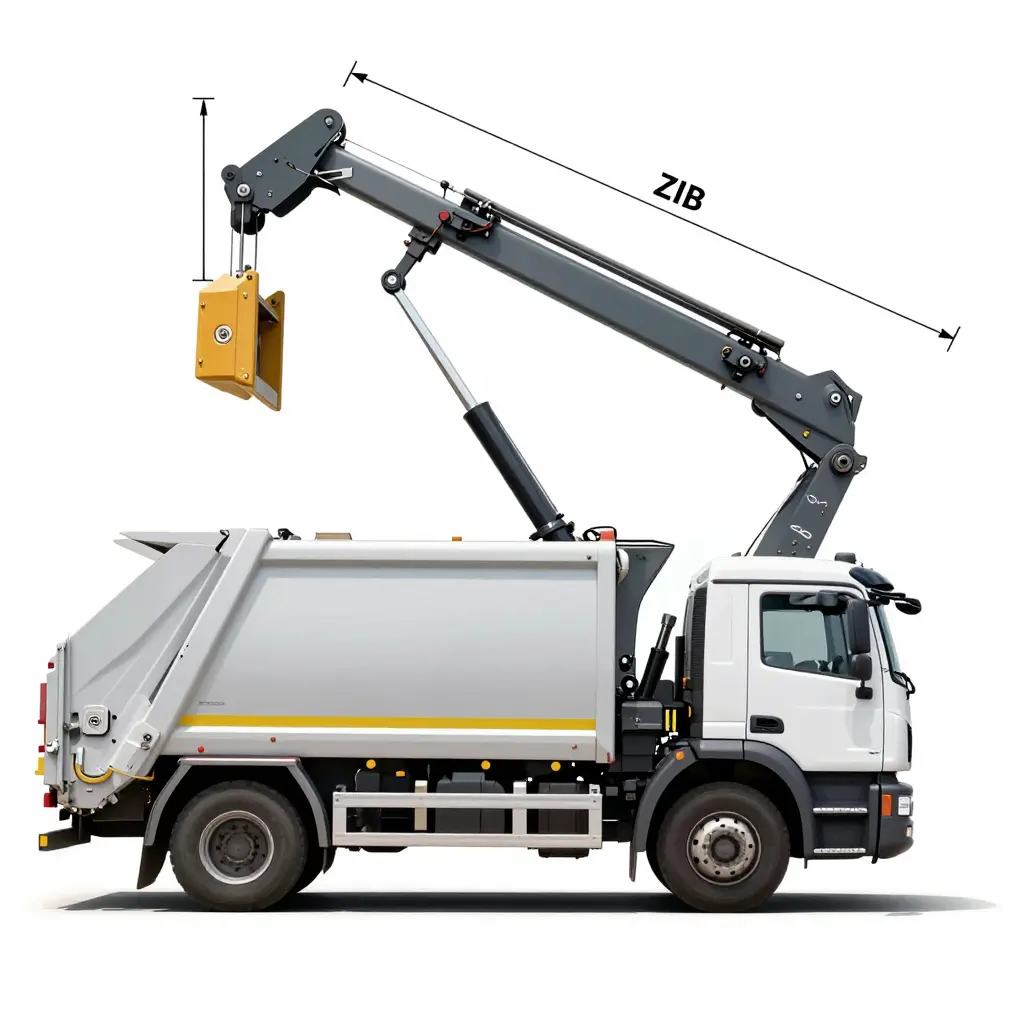
On a skip loader garbage truck, the jib arm is the structural link between the hydraulic lift and the bin. Five measurements describe it: pivot height above the chassis frame, arm length from pivot to hook, the arc the arm sweeps, the point where the hook meets the bin’s lifting eye, and the tilt angles at pick-up and set-down.
None of that is adjusted on the route. The geometry is fixed when the body is built, which is why two trucks quoting the same rated capacity can behave differently from the first lift. Frame heights, bin standards and axle limits vary between markets, so manufacturers set the arm to suit the chassis and the bins their customers actually handle. The differences then show up as cycle time, hook contact quality and rear axle load transfer.
Put the specification sheet next to the bins the business handles before any purchase decision. Matching bin size to chassis length is the first check in that comparison.
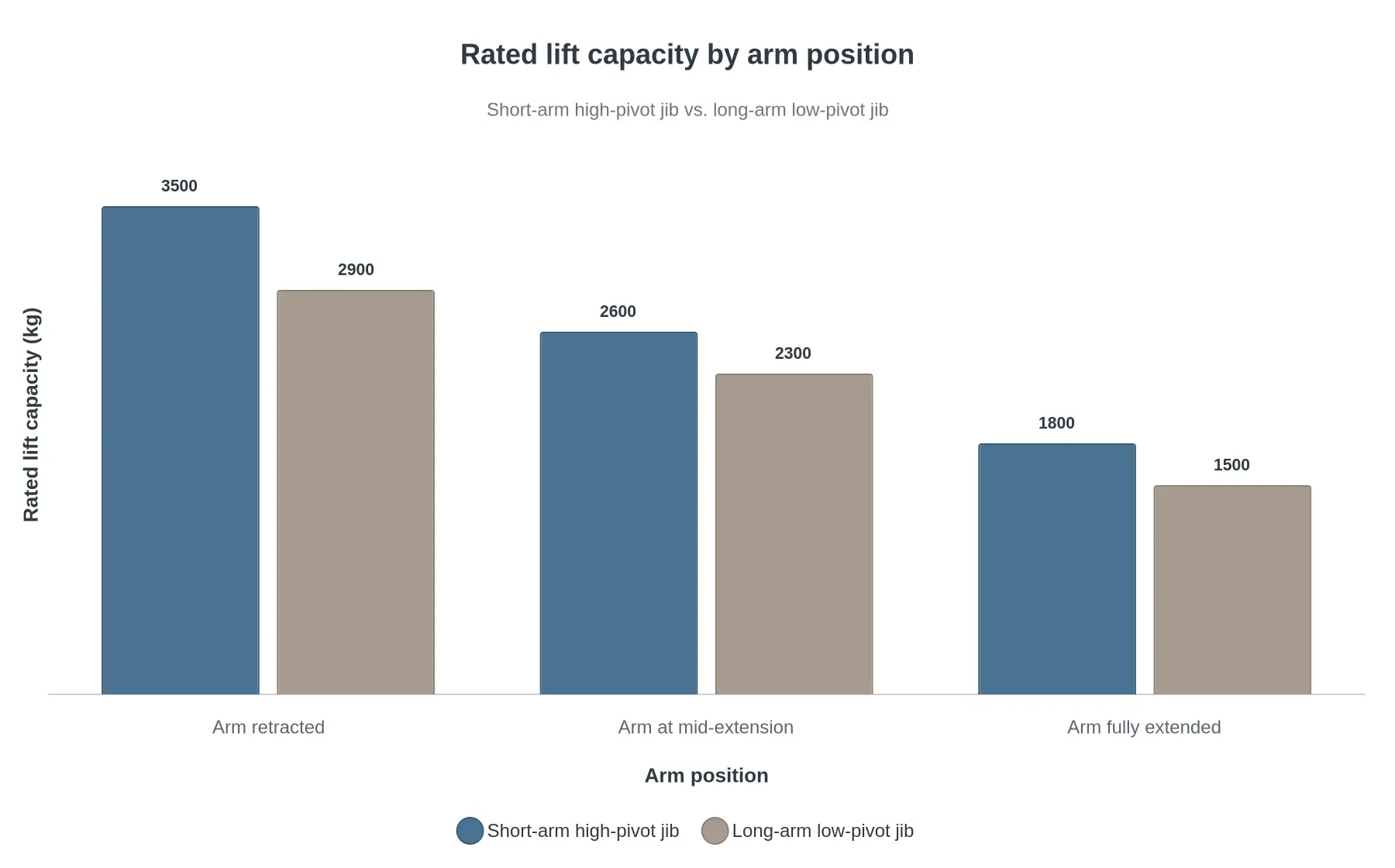
Rated lift capacity (kg) at three arm positions for two generic jib builds; figures are illustrative reference values. Capacity falls as the arm extends, and the rate of fall differs between builds.
Why Skip Loader Manufacturers Set Jib Arm Geometry Differently
Geometry is settled at the design stage, and it follows the chassis a body is built on. Two skip loader garbage truck manufacturers can quote the same rated capacity and still deliver trucks that behave nothing alike, because the arm has to fit the frame underneath it.
Frame length and wheelbase set where the pivot sits fore and aft, and how much rear overhang is left behind the axle. Subframe and pivot height then fix the arc the arm sweeps above the deck.
The bins impose the rest. Bin sizes and the hook heights the truck must accept define the reach needed; cylinder stroke and mounting position turn that reach into a working stroke. Rear axle load limits cap what the result may ask of the chassis.
The trade-off is unavoidable. A longer arm reaches further and lifts clean over obstacles, but it lengthens the load’s moment about the pivot and takes capacity away. A shorter arm on a higher pivot holds capacity well, and it asks for tighter approach positioning before the hook seats. Jib arm angle is a build-specific compromise rather than a catalogue constant, so the hook lift on each truck should be judged against the bins it will service; that check starts with checking bin size against chassis length.
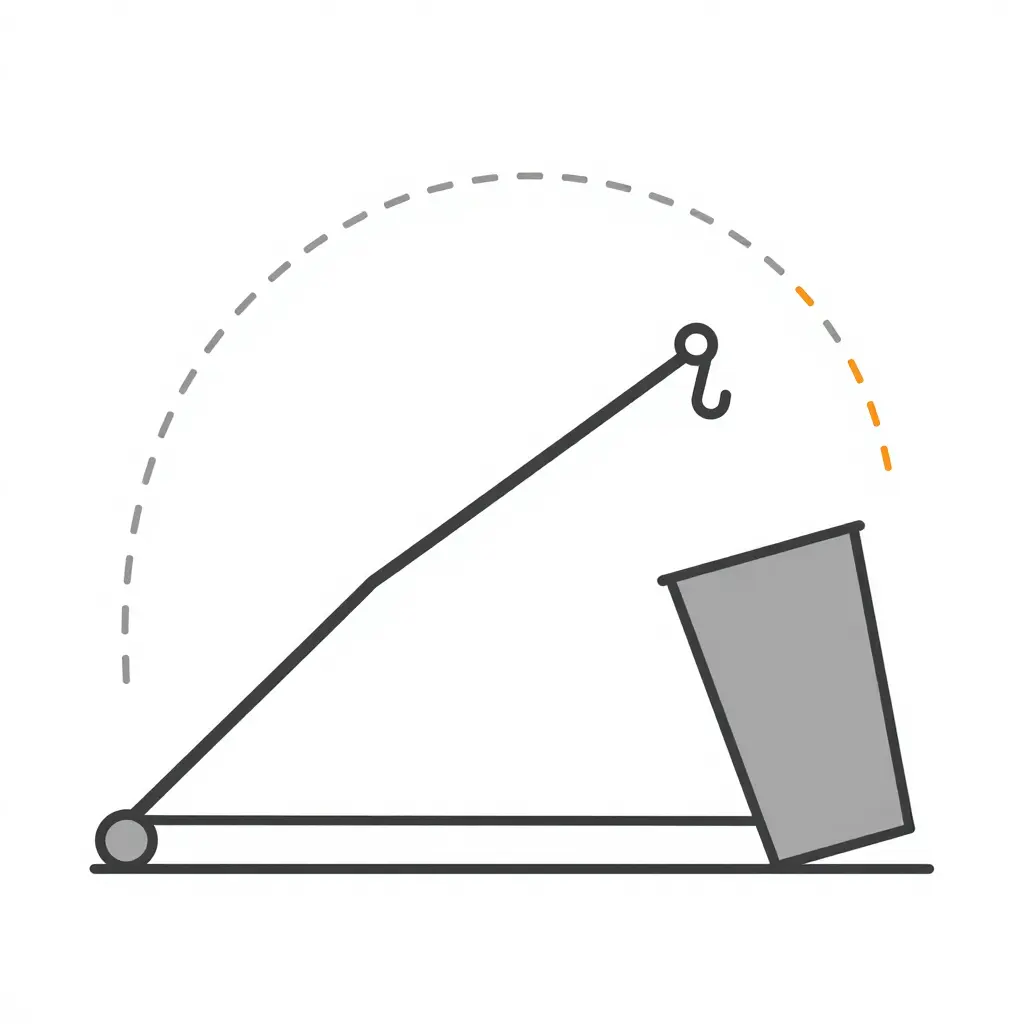
The geometry in one glance: pivot, arc, both hook positions, and the bin rotated to dump.
Daily Collection Route: Where Jib Arm Geometry Shows Up
Two skip loaders can share a chassis, a payload rating and the same bin sizes and still feel like different trucks by the end of a shift. The daily route is where the geometry announces itself, because every difference gets repeated dozens of times.
Lift cycle time is the clearest case. A short-arc design pulls a bin up and over in a tighter sweep; a long-arc arm spends a few extra seconds per lift and buys reach with them. Seconds are invisible on one bin. Across a hundred stops they take a real bite out of the shift, and they decide whether the last street is serviced before dark.
Approach and clearance behave the same way. A compact arm lets the driver place the hook from a straighter, shorter approach on tight blocks. A longer arm needs room to swing the hook into position and punishes a badly parked car more severely. Pivot height governs lip alignment: a low pivot meets a standard bin lip almost level, while a high pivot arrives at an angle and leaves the driver nudging and re-seating.
Ground contact is a third effect. A long arm on a rearward pivot throws more of the lifted load onto the rear axle, and on soft or uneven ground that decides whether the truck settles or floats. How jib angle loads the rear axle on soft ground walks through that trade-off.
Cold starts expose it too. A long arm needs more oil volume per stroke, and often more pressure, to finish its first full stroke, so on a freezing morning a marginal pump stalls on the long-arc machine while a short-arc unit still creeps up. Why cold morning lifts stall covers the pressure side.
Geometry Variables and Route Consequences: A Supplier Reference Sheet
Send this table to a supplier as it stands. Read it across: each row pairs a build dimension with what a driver feels on the route.
| Geometry variable | What it changes on the route | Spec to lock with the manufacturer |
|---|---|---|
| Pivot height | Hook travel arc and how high the bin clears kerbs and overhead cables | Pivot centre height above ground, in mm, with tolerance |
| Arm length and reach | Distance the hook extends past the rear bumper at full extension | Arm length, maximum reach, and rated load at that reach |
| Hook engagement geometry | How squarely the hook seats in the bin eye during a misaligned approach | Hook profile, throat depth, eye clearance, and engagement angle limits |
| Cylinder stroke and mounting angle | Lift speed, breakaway force on a wet or overloaded bin, and stall risk | Stroke length, mounting angle in degrees, and working pressure |
| Subframe height relative to frame rails | Chassis clearance, body tilt, and where lifting stress enters the rails | Subframe top height above rail and mounting bracket spacing |
| Load moment versus rear axle rating | Whether a full bin at full reach overloads the rear axle on the way in | Maximum rated load moment in kNm and allowable rear axle load |
The right-hand column is what to get in writing before the build starts. Verbal assurances about arm length or pivot height do not survive a full-bin lift on a wet kerb, and they settle no dispute later, so ask for each figure on the purchase order or the technical annex with units and tolerances stated. If you are still at the evaluation stage, start with these subframe and lift cylinder checks before comparing prices.
How to use the sheet in a supplier conversation
Work through the rows in order, because the answers depend on each other. Pivot height sets the arc; arm length sets the reach; the cylinder stroke has to serve both. A supplier who quotes one figure without the others is quoting a drawing, not a working truck.
A few points are worth pressing:
- Ask for the load moment rather than a lift capacity figure. Capacity without reach says nothing about the rear axle.
- Confirm whether the subframe height is measured to the rail top or the rail web; the two differ by the flange thickness, a centimetre or so on most truck rails.
- Request the hook engagement tolerance in writing if your route includes tight blocks where the driver cannot line up squarely.
With those numbers fixed, bin size, chassis length and hydraulic flow can be negotiated around a defined baseline instead of being revised after the first lift.
Checks to run before you sign a skip loader build spec
The geometry that suits one route can stall or overload on another, so lock the numbers down in writing before the build starts.
- Measure the hook height of the bins in service. Build to your fleet, not the catalogue, or the arm fights every lift from day one.
- Ask for pivot height in millimetres. Millimetres settle arm reach, bin clearance and loading angle without guesswork later.
- Ask for the rated lift curve, not a peak figure. A single number hides what happens at the angles you lift from all day.
- Check rated load at full extension. Most overloads and stalls happen at reach, so the extended figures have to clear your heaviest bin.
- Get the subframe and lift cylinder specification together. Walking through the subframe and lift cylinder checks up front keeps thin steel and undersized rams off your chassis.
- Settle the hoist type against your operating pattern. If one driver swaps bins on tight city blocks, weigh hooklift versus cable hoist before the geometry is fixed.
- Inspect the chassis frame rails for cracks. On a used base unit, chase hidden frame rail cracks before the build; a strengthened arm on a cracked rail only moves the failure.
Sign nothing until each figure sits in the spec sheet, dated and agreed by the manufacturer.
FAQ: skip loader jib arm geometry
Does a longer jib arm always lift more?
No. Extra length buys reach, and rated capacity usually falls as the moment arm grows and cylinder angles worsen. A skip loader garbage truck rated at eight tonnes on a short arm often rates lower on its long-arm version.
How much does lift cycle time geometry typically change per bin?
Three to eight seconds per bin is a fair working range; the real spread depends on stroke length and pump flow. A shorter arm travelling through a lower jib arm angle completes the swing sooner, while tall pivots and long arms need more pump volume per stroke. Across a hundred-bin route the gap compounds.
Can an existing skip loader be re-geometried later?
Yes, but the work is structural. Expect new jib plates, repositioned pivots and different cylinder mounts, plus checks on the frame rails. Capacity and stability ratings then have to be re-stated for the new arm.
How do I compare two manufacturers quoting the same rated capacity?
Compare at the radius and bin size your route uses, not the headline figure. Ask each manufacturer for the lift curve, arm length, cylinder bore and stabiliser footprint behind the number, then confirm both quotes assume the same bin weight and ground conditions.
The Geometry Belongs in the Specification
Jib arm geometry is fixed at fabrication, not adjusted later in the yard, and it drives behaviour you can measure: lift angle, cycle time per bin, axle load on soft ground, and how the arm behaves on the fourth lift of a cold morning. That is what makes it a specification item rather than a preference.
We are a special vehicle manufacturer working under CRRC’s quality system. We build to a jib arm geometry agreed with the buyer rather than shipping a standard catalogue unit. The range covers tanker trucks, fire trucks, garbage trucks, sanitation vehicles and trailers.
Two trucks with identical body volume can post different daily costs once the arm geometry is set differently. Buyers weighing manufacturer sizing will recognise the same logic on other bodies.
Price per unit is therefore the wrong first comparison. What decides the purchase is whether the written specification states the geometry the route actually requires.