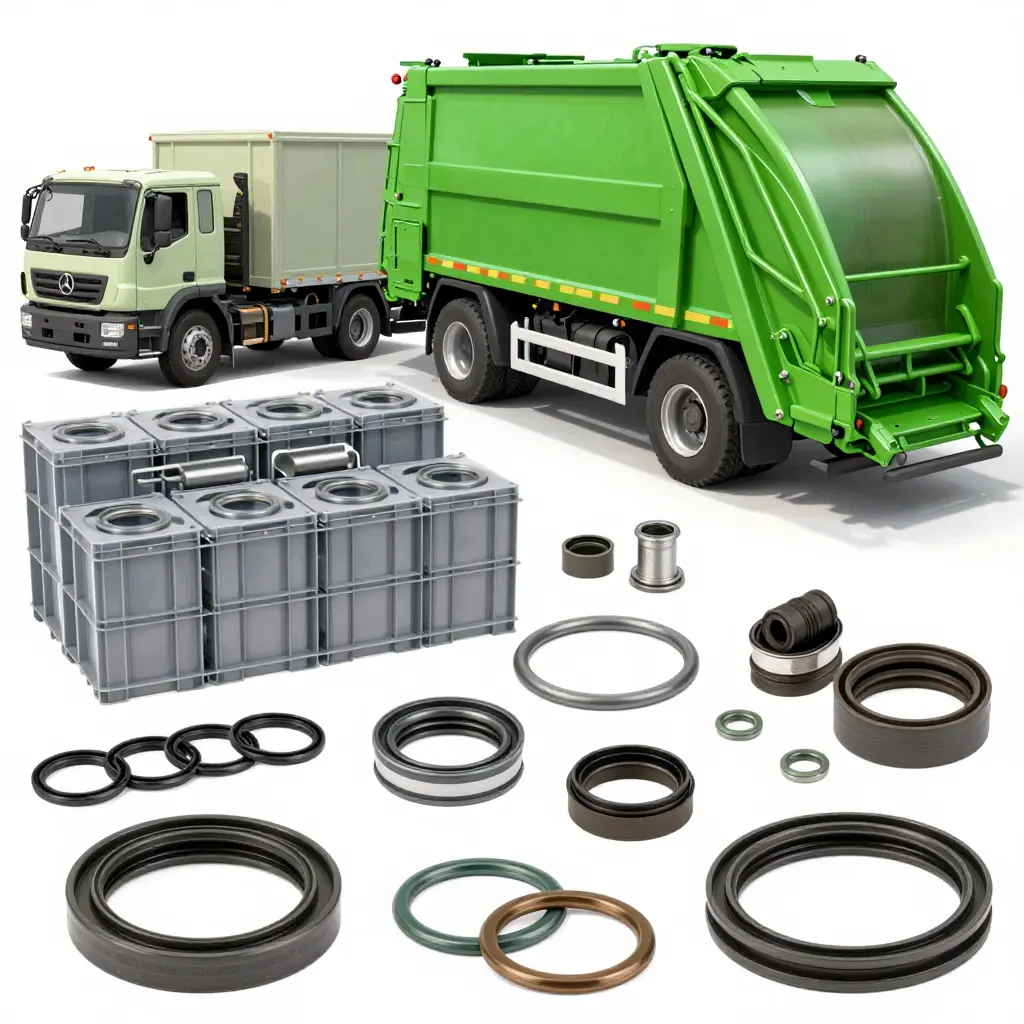
Hydraulic seal kit stock is the inventory a supplier holds on the shelf: rod seals, wipers, O-rings and packing, cut for the bore and rod diameters used on the tipper body lift and the tailgate circuit. These are matched parts, not universal ones, so a kit sized for a different bore or rod will not rescue the truck. When nobody nearby holds the right kit, the tipper stays parked.
That is where operating cost gets decided, not at the quotation stage. A garbage tipper truck supplier China buyers shortlist on price and specification can still leave a unit standing for weeks when the seal kit stock behind the sale is thin, because a weeping rod seal is an ordinary event on any tipper working wet refuse. Buyers who audit body lift cylinder condition before delivery usually reach the same conclusion: fleets rarely go down over a major failure. They go down waiting for a small part.
Price and specification say what the truck is worth on delivery day. Seal kit stock policy says what it costs to keep it working. What follows covers the stocking models in use, the questions worth putting to a supplier, and the specification work that has to happen before any of it holds.
Hydraulic seal kit stock models and their effect on fleet downtime
Four stocking models cover most buyer situations on Chinese-supplied garbage tipper fleets. The lead times and capital figures below assume a single tipper body with a standard multi-stage lift cylinder, and a leaking rod or ram seal rather than a scored barrel. For the hydraulic decisions sitting behind these choices, see sourcing a garbage tipper truck with the right hydraulic spec.
| Stock model | Typical replenishment lead time | Spare kit held on site | Expected downtime per seal failure | Working capital tied up | Best fit |
|---|---|---|---|---|---|
| No stock – order per failure from overseas supplier | 6-10 weeks | 0 kits | 6-10 weeks | Under 1% of truck value | One or two trucks, low hours |
| Dealer-held kits in destination market | 2-5 days | 0-1 kits | 3-7 days | 1-2% of truck value | Small mixed fleets, mixed brands |
| Consignment stock at the buyer’s yard | Same day | 2-3 kits | 1-2 days | Near zero until used | 5-15 trucks, single depot |
| Factory-owned buffer stock with pre-agreed replenishment | 24-72 hours | 3-5 kits | 1-3 days | 2-4% of truck value, paid on consumption | 20+ trucks, multi-site operations |
Downtime ranges reflect common tipper and compactor duty cycles. They are planning estimates, not guarantees.
How Seal Wear Turns Into Lost Operating Hours
On a garbage tipper, the body lift cylinder and the tailgate cylinder carry the working cycle. When the right kit is missing from the parts cabinet, a worn lip stops being an oil weep and becomes a stopped vehicle. The real cost is not the price of the O-ring or the rod seal; it is the hours the truck stands still multiplied by what those hours were meant to earn on a collection route. Fleets that buy seals by the kit and fleets that buy them one at a time are separated by that arithmetic.
Wear usually starts at the wiper. That outer lip is the first line of defence against the grit and road film the rod drags in on every lift, and once its edge rounds over, abrasive material rides past it and chews at the rod seal underneath. Oil weeps, contaminated oil carries the abrasive into the barrel and scores the bore, and the damage spreads through pump and valves. Holding pressure bleeds away: the body lifts more slowly, drifts down under load, and finally refuses to raise a loaded body at all.
After the cylinder is opened, the clock runs in three blocks: diagnosis to establish whether the fault sits in the seal, the pump or the control valve; sourcing when the kit is not on the shelf; and the labour to strip the cylinder, remove the gland nut and rebuild the rod assembly. Diagnosis and fitting hours are roughly fixed. Sourcing is not, which is why it is the one worth controlling at purchase. Leaking tailgate cylinders bring their own trail of trouble, as this look at why leachate drips from tipper tailgate seal gaps shows, and lift faults are often misread before the cylinder is opened, as these common body lift issues on tipper garbage trucks explain.
Seal replacement is cheap; waiting for a seal kit is not. Diagnosis and disassembly hours are fixed once a cylinder is open, so the only variable a fleet controls is how long the vehicle waits for parts. Stock depth, meaning spare rod and wiper kits, gland nuts and bore repair options matched to the number of cylinders in service, is a downtime control measure rather than a purchasing formality. It turns a multi-day sourcing delay into a single planned workshop shift.
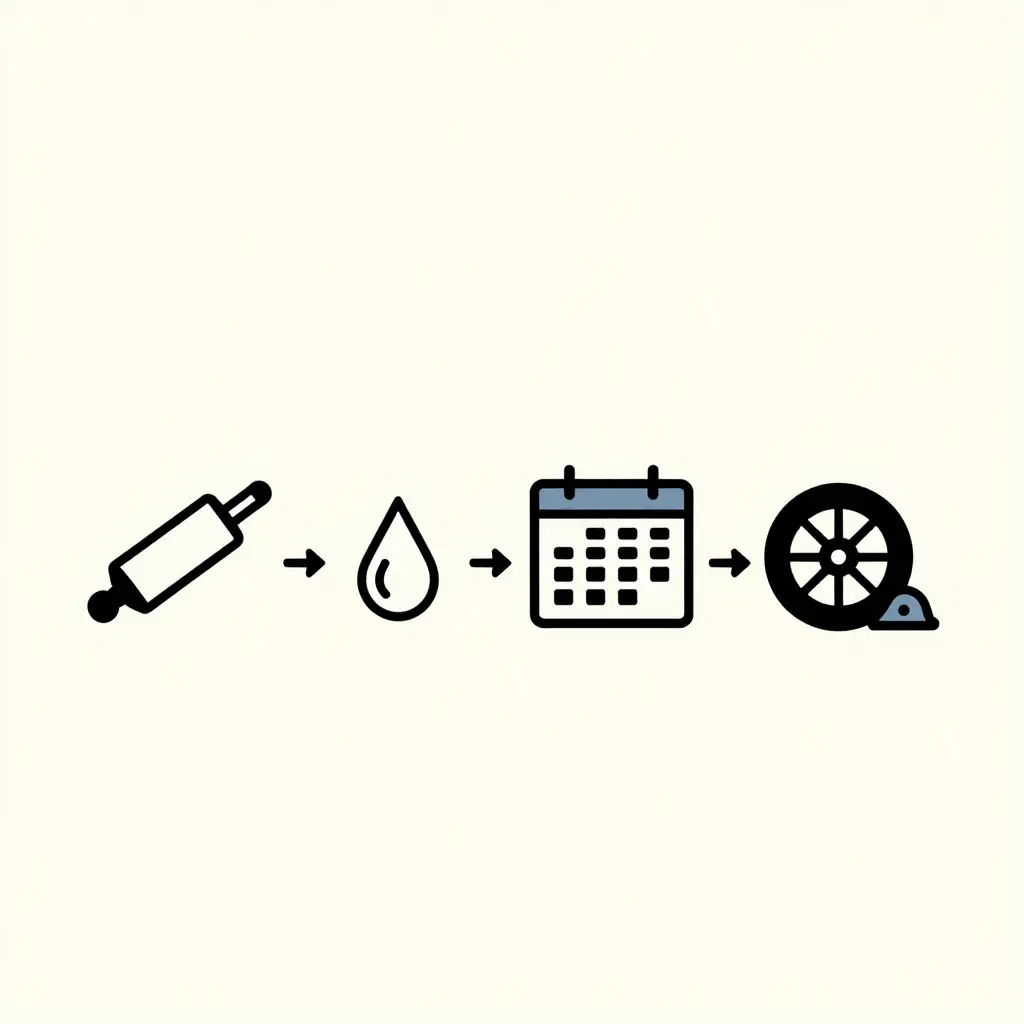
Seal wear, fluid loss, a wait on parts, an idle truck.
Supplier stock verification questions before you order
Put these points to the supplier in writing before you commit to a production slot.
- Have the part-number cross-reference for the lift and tailgate cylinders checked against the hydraulic spec sheet before you approve.
- Ask which seal material grade the supplier specifies for mineral and for biodegradable oil service in your climate.
- Require the kit contents in writing: rod seal, wiper, O-rings, backup rings and dust seal, per cylinder.
- Ask how many complete kit sets are physically held per cylinder model, not just listed on paper.
- Get the re-order window in weeks, measured from purchase order to dispatch.
- Confirm whether kits ship with the truck or separately, and who clears and pays import duty.
- Agree who pays freight on warranty replacement kits, and the response time for claims.
- Ask for two customer references running the same truck model, so you can check availability yourself.
Record the answers in the contract annex. Stock promises that stay out of the contract have a habit of disappearing once the deposit clears.
Stock position decides how long a tipper sits still. The chart below compares expected downtime per seal failure across the four approaches, from a bare shelf to a factory buffer held close to the fleet:
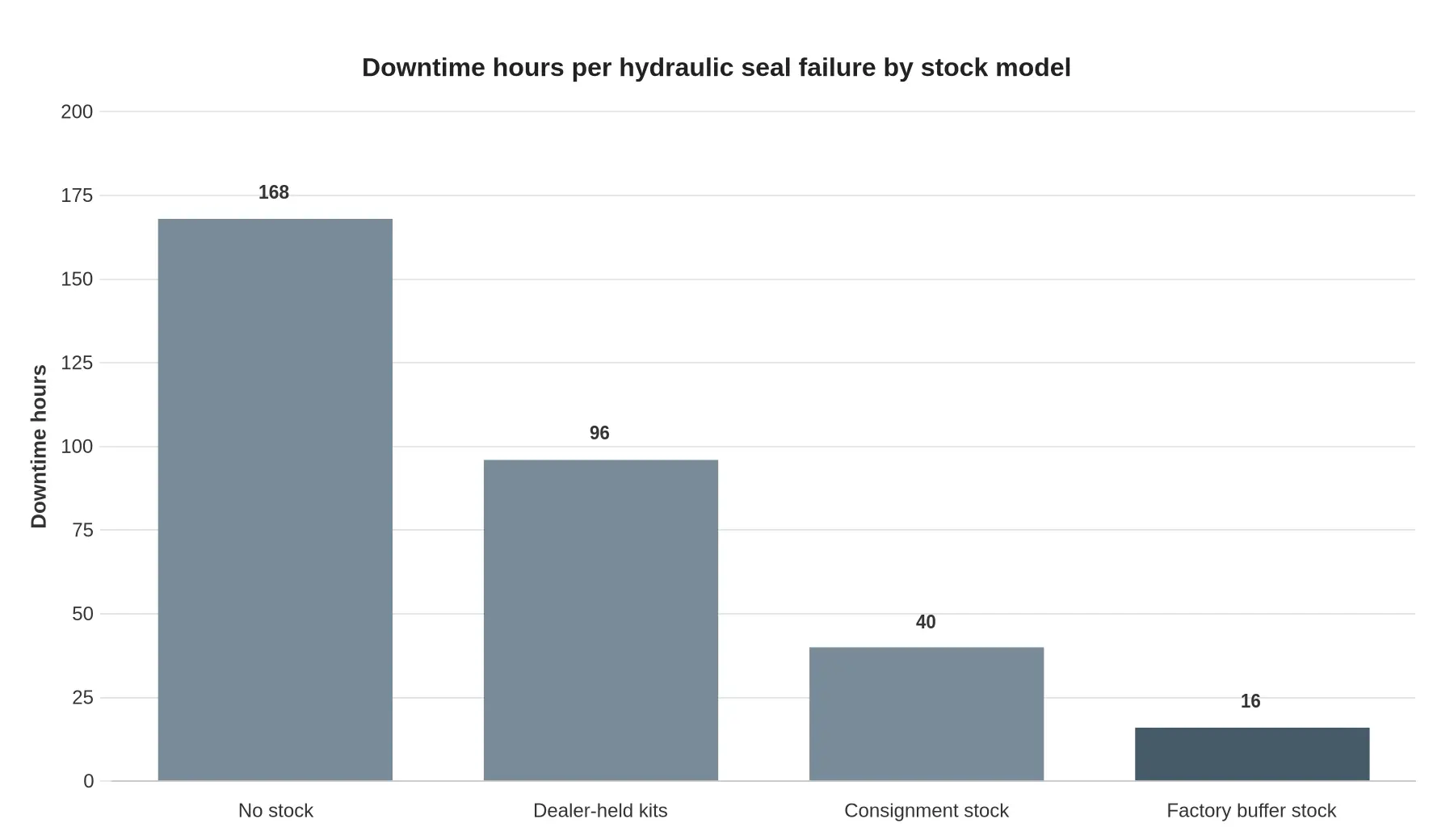
Illustrative planning figures for comparison, not measured field data.
The gap between “no stock” and a factory buffer runs to weeks of lost tipping, not hours of fitting. If cylinder and body hardware are still being specified alongside the spares plan, this guide to sourcing a garbage tipper truck from China covers the hydraulic spec worth locking in early.
Lock the Hydraulic Specification Before the Kit List Is Fixed
Seal kit stock shortens downtime only when every part in the kit matches the cylinder actually built into the truck. A kit that is “close” is money sitting on a shelf that cannot be used the day a ram starts weeping.
Start with bore and rod diameter for every cylinder on the body: main lift rams, tailgate ram, and any packer or ejection cylinder. Those two dimensions set seal cross-section, wiper and gland size, and a figure taken from a photograph or a remembered model number is how the wrong kit gets ordered.
Then check seal material against the oil grade the truck will actually run in its destination market. Mineral ISO grades, biodegradable esters and cold-climate blends stress elastomers differently, and a nitrile kit in a machine on ester fluid will not last, however much stock sits behind it.
Keep the cylinder maker consistent across a batch. One maker means one seal family, one torque table, one spare part number, and it is easier to hold a China garbage truck manufacturer to a single repeatable build. Mixing cylinder suppliers across ten units multiplies the kits a fleet must hold, splits the safety stock and slows every repair.
Body steel belongs on the same list. Specify body steel grade and hydraulic specification together, since plate thickness and grade decide how well the cylinder mounting bosses and hinge points hold their shape under load. Use a garbage tipper truck sizing guide to turn route tonnage into cylinder sizing before anything is quoted.
The buyer-side move is to fix bore, rod, seal material and cylinder brand in the purchase contract at order stage. That fixes the hydraulic seal kit stock list before production starts, and leaves a small, clean inventory that a garbage tipper truck supplier China buyers can audit.

Read the diagram left to right: each stored kit set plugs into exactly one cylinder specification. No cross-compatibility, no substitution, no guessing at the parts window.
FAQ: Hydraulic Seal Kit Stock, Fitment and Supplier Paperwork
Seal availability decides how quickly a tipper returns to route, so stock and documentation planning belongs in the purchase decision, not in the breakdown. The four answers below cover quantities, cross-supplier fitment, shipping documents and warranty handling. For cylinder specification context, review these hydraulic specification checks for China-sourced tippers.
How much hydraulic seal kit stock should a fleet hold per tipper cylinder model?
One complete kit per cylinder model for every three to five units in service, plus one for the highest-cycle model. Add a second kit when China lead times run past four weeks, since waiting on seals is a common driver of fleet downtime.
Do seal kits from one China garbage tipper truck supplier fit another supplier’s cylinders?
Rarely without verification. Bore, rod diameter, gland design and seal cross-sections are not standardised across Chinese builders. Match the kit to the cylinder part number, or measure bore, rod and groove dimensions and send photographs before ordering. Buying blind produces leaks and repeat labour.
What documentation should accompany a hydraulic seal kit shipment?
A packing list with kit part numbers, a material datasheet naming the seal compound (usually polyurethane, nitrile or PTFE), dimensional drawings and a certificate of conformity. Ask for batch traceability as well, so a failed seal can be traced to its production lot.
How does seal kit stock interact with warranty claims on cylinder failure?
Cylinder warranty usually requires the failed parts back intact for inspection. Holding the right stock lets you fit an approved kit and put the truck back to work while the failed seal set and rod are kept for the claim. Unapproved or mismatched kits often void coverage.
Put Stock Policy in the Purchase Decision
A hydraulic seal kit is not a spare part you think about once the lift cylinder starts weeping. It is a fleet downtime variable that a buyer can specify, question and verify at the purchasing stage. Chassis-side work sits in the same picture: the checks set out in this guide to body-to-chassis mounting checks before delivery decide whether a leaking seal becomes a two-day repair or a two-week one. A garbage tipper truck supplier China buyers can genuinely lean on will document kit coverage in writing: part numbers, quantities, superseded seal references, and the lead time on the seal that always seems to be out of stock. That willingness to put coverage on paper is a checkable indicator of after-sales support. Reassuring emails are not.
The recommendation, in short
Fix the cylinder and seal specification in the contract, agree a held quantity of complete kits per unit, and write the replenishment terms into the supply agreement: stock levels, restocking triggers, delivery windows. Three clauses, agreed once, that keep a routine seal change from becoming a scheduling crisis.
Fleets that specify stock at the purchasing stage stop paying for it in lost workshop hours later.